

- Author: Simon Jones
- Posted: August 26, 2026
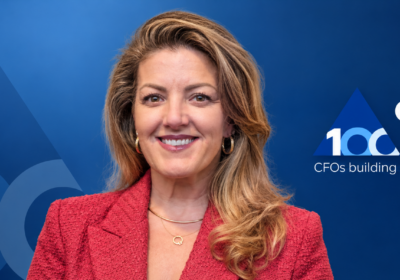
Alex Bell: CFO, Challenger & Chair, G100
Profile: CFO, Challenger & Chair, Group of 100
Alex Bell never chased the CFO title. The Challenger Limited finance chief – and new Chair of the Group of 100 (G100) – came to the profession through a love of maths, a curiosity about how businesses make money and, she admits, a desire to make her accountant father proud, at least in those early days.
“I originally liked the appeal that there was a right answer to things,” she says. “But in practice, a long way from the world of textbooks, I soon realised there weren’t necessarily right answers to things at all – and that really intrigued me.”
What kept her was the vantage point rather than the title. “I don’t think I ever set out to be a CFO specifically – it wasn’t a title I was chasing. It became a natural progression because I wanted a broader leadership role.”
A collective voice for CFOs
Bell has taken on the G100 Chair at a moment when a raft of new challenges and demands on finance leaders appear to have converged all at once.
“CFOs today are grappling with issues that extend far beyond the traditional finance remit,” she says. “AI, cyber, productivity, regulation – the list is long.”
What she wants to protect is what she valued as a member, which is sitting in a room full of peers who understand the job. It is, she admits, a lonely seat.
“When you’re a CFO, particularly at a big ASX-listed company, there aren’t that many people within your organisation you can go to for good counsel. Hopefully you’ve got a really good relationship with your CEO – and I do – but on CFO-specific matters, you need a network of peers outside that.”
Where she sees space to grow is influence – bolstering the G100’s thought leadership and stepping into public policy, precisely because individual CFOs so rarely can.
“No CFO wants their name on the front page of the AFR taking a stand on something publicly,” she says. “So, the G100 provides a mechanism to act as a collective voice. I want it recognised as the leading voice for Australian CFOs, and to drive positive change for the profession.”
The trade-off defining the year ahead
When asked what she believes is keeping finance leaders awake, Bell focuses heavily on the mandate to grow and transform, particularly as the surrounding regulatory and risk environment grows ever-more complex.
“There’s still lots of pressure for cost discipline and careful capital allocation, while still needing to invest in technology and modernise operations,” she says. “You can’t be the ‘no’ person. But you do need to help the organisation work out what to say ‘yes’ to?”
And the pressure that will bite hardest over the next 12 months? Balancing technology investments against financial discipline.
“Investing in technology is a bottomless pit of doom if you’re not careful. We’ve seen lots of organisations go down a pretty expensive AI path and not reap much in the way of benefits yet. But if you believe that technology investment means a one-off transformation project, that’s a fantasy.”
AI is the enabler, not the whole strategy
On AI, Bell’s advice is to strip away the novelty and apply the same discipline as any other capital decision.
“CFOs should be asking the same questions about investments in AI that I’d ask about any investment,” she says. “Start with the problem you’re trying to solve.”
Her concern is that hype has inverted the process: “People have jumped to solutions without knowing what the question is. And that means no thought has been given to what success looks like, or what the return is.
“People say you need an AI strategy. But no one ever talked about what your internet strategy would be. If you view AI as an enabler rather than a strategy in and of itself, that’s likely to lead to a better mindset around outcomes. AI can accelerate your strategic objectives, but it shouldn’t replace them.”
What the next generation needs
Bell is well aware that the path into the CFO chair has widened, significantly so in the past two decades, and it will likely continue to do so as the role evolves.
“Being a good financial controller used to be all that really mattered,” she says. “Yet if you look around the ASX today, there are fewer and fewer CFOs who’ve had that traditional rise through finance. You’re getting people in CFO seats who were investment bankers or corporate strategists.”
What separates the standouts, she adds, is not technical depth but instead the qualities the profession once ignored.
“Curiosity, adaptability, resilience, empathy – those are the things that will set true CFO leaders of the future apart. Organisations won’t want CFOs who are just good at maths, but actually people who want to run businesses.”
Sponsorship and what she wants for the G100
Women hold only around a quarter of ASX 100 CFO roles – a statistic Bell finds frustrating because finance has no excuse.
“If you look at the diversity of finance teams as a whole, they’re actually pretty good,” she says. “They don’t have the same systemic issues as technology or investment teams, where the pipelines aren’t there at all. So finance should be better.”
Her advice is to surround yourself with people who will sponsor you and sing your praises: “My career definitely accelerated because people advocated for me, or gave me opportunities to do things I didn’t see in myself yet.”
But for all the challenges facing CFOs right now, Bell is bullish about the future. The contemporary finance leader, she argues, now has a genuine claim to be seen as a leader of the business instead of merely a custodian of its accounts.
“That’s changed how people think about the CFO role. Hopefully it creates more of a pipeline of CFOs moving into CEO roles.”
And she hopes her tenure at the G100 will help propel that pipeline into reality.
“I want the G100 in a position where it’s more influential and more relevant than it is today – where members see really clear value, and where people know who the G100 are. Building a legacy of constructive contribution to public policy would be something I’d be really proud of.”
Related Posts