


- Author: CFO Magazine A NZ
- Posted: August 29, 2026
Turning Acquisitions into Opportunities
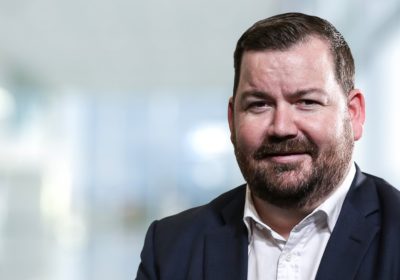
Stephen Dolahenty, CFO | Zip Water & Culligan
Growth creates complexity. More markets, more business models and more people can make it harder for organisations to stay aligned while continuing to move quickly.
Having spent more than a decade helping steer Zip Water and Culligan through significant expansion, CFO Stephen Dolahenty believes the answer is not greater centralisation, but clearer strategy, stronger governance and empowered local leadership. He shares how that approach is helping support growth across Culligan’s portfolio of businesses in Australia.
Creating alignment across a growing portfolio
For many organisations, growth brings a familiar challenge: how do you maintain consistency across multiple businesses while preserving the agility that made them successful in the first place?
It’s a challenge Stephen Dolahenty knows well. As CFO of Zip Water and Culligan, he has helped guide the business through private equity ownership, its acquisition by Culligan and the expansion of a broader portfolio that today includes businesses operating across different markets, customer segments and business models.
According to Dolahenty, success starts with clarity.
“We have a very clear strategy and purpose, and that gives everyone a common direction,” he says. “The challenge isn’t creating more control. It’s making sure people understand where we’re heading and giving them the tools and support to get there.”
That approach has enabled the business to continue focusing on its core growth priorities across Commercial and Residential HydroTap and aftermarket services, while also expanding into adjacent categories and new business models.
Keeping ownership close to the customer
As organisations grow, there can be a temptation to centralise decision-making. Dolahenty believes the opposite is often true.
While strategy, culture, governance and support functions are coordinated centrally, responsibility for commercial decisions sits with leaders closest to the customer and local market.
“The reality is that one person can’t know everything that’s happening across multiple businesses and geographies,” he says. “You need strong leaders who understand their markets, own their results and can make decisions quickly.”
Across the portfolio, this means creating a framework where local leaders are accountable for performance while being supported by central finance, HR and IT capabilities. The role of finance is to provide visibility, consistency and guidance, not to slow decisions down.
“People closest to the customer are often closest to the right decision,” says Dolahenty. “Our job is to help create the structure that allows them to make those decisions with confidence.”
Turning acquisitions into opportunities
That philosophy has become increasingly important as Culligan continues to grow through acquisition.
Most recently, the integration of Complete Home Filtration (CHF) introduced a business with a different operating model, bringing expertise in performance marketing, lead generation and direct-to-consumer sales.
For Dolahenty, successful integration is about much more than systems and reporting.
“Every acquisition brings different capabilities, different experiences and a different way of thinking,” he says. “The goal isn’t to make every business identical. It’s about creating alignment where it matters while preserving the strengths that made that business successful.”
Finance played a central role in bringing together processes, governance and operational systems, while supporting a smooth transition for employees and customers. The experience reinforced an important lesson: the more diverse a portfolio becomes, the more important it is to balance consistency with local ownership.
The evolving role of the modern CFO
Having started his career in accounting more than three decades ago, Dolahenty has witnessed significant change in both the profession and the expectations placed on finance leaders.
When he entered the workforce, success was often associated with long hours and highly manual processes. Today, technology has transformed how finance teams operate, allowing professionals to focus less on producing information and more on helping businesses interpret and act on it.
“Companies aren’t looking for people to work harder. They’re looking for people to work smarter,” he says.
The profession has also become more accessible and flexible, attracting people from a wider range of backgrounds and creating opportunities for continuous learning throughout a career.
For Dolahenty, that commitment to learning remains essential. Recently completing the Australian Institute of Company Directors program, he believes the best finance leaders stay curious, continue developing their skills and remain connected to the detail of the business.
“No matter how senior your role becomes, you have to stay grounded in what’s happening across the organisation,” he says. “At the same time, you need to trust the people around you and empower them to make decisions.”
As businesses continue to navigate growth, acquisitions and evolving customer expectations, Dolahenty believes that balance will become increasingly important. The future of leadership, he suggests, is less about directing every decision and more about creating an environment that is values led and trust flourishes, that’s where good decisions happen.
And in a growing portfolio of businesses, that may be one of the most valuable contributions any leader can make.
Related Posts