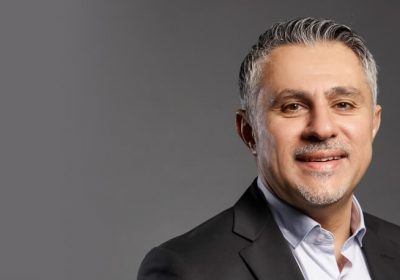



- Author: Belinda Paris Leadership Coach
- Posted: September 4, 2026
The CFO to CEO Path: What Actually Makes the Difference
Why financial credibility may open the door, but enterprise readiness determines who is trusted to lead the organisation
Over the past few months, I have met several CFOs who want their next role to be CEO. Their timing is understandable. CFOs are being considered for the top job more often, and the finance role itself has moved much closer to the centre of enterprise decision making.
Recent data reported by CFO Magazine A/NZ shows that more than one in three ASX100 CEOs have held a significant finance role during their career. Twenty per cent were promoted directly from an internal CFO role, compared with 12 per cent in 2019. That is a meaningful shift.
It would be easy, however, to read those numbers and assume that a strong CFO is naturally the next CEO. That is where I disagree.
A CFO can understand every number in an organisation and still not be ready to lead every part of it. The move is not simply a broader version of the finance role. It changes the leader’s relationship with growth, risk, people, customers, culture, strategy and accountability.
For 27 years, I have worked with senior finance leaders from both sides of the hiring equation. First, as an executive recruiter working with CEOs, boards and leadership teams. Now, as a career strategist helping CFOs position themselves for larger executive roles. The consistent lesson is that boards do not appoint a CFO as CEO because they want better finance leadership. They appoint one when they believe that person can lead the whole organisation.
That distinction sounds obvious. In practice, it is where many otherwise credible CFO candidates fall short.
Why contemporary CFOs are better placed than ever
The case for a CFO becoming CEO is stronger than it was a decade ago. Many contemporary finance leaders already sit across strategy, transformation, capital allocation, technology, data, risk, operations, investor relations, regulation and major transactions. They see the whole business, understand the trade-offs and often have a closer relationship with the board than any executive other than the CEO.
They also bring qualities boards value when conditions are difficult: judgement, financial discipline, comfort with scrutiny, an understanding of value creation and the ability to make complex issues clear. In periods of uncertainty, that combination can be highly attractive.
Prominent Australian and New Zealand appointments from the past few years support the point. Vanessa Hudson moved from Group CFO to CEO of Qantas, but her experience was not confined to finance. Her Qantas career included senior commercial, customer and international roles. Damien Nicks moved from CFO to CEO of AGL with deep energy, customer, project delivery and multinational experience. Paul Johnston became CEO of Tower in 2025 after serving as CFO, backed by international, operational and consumer-focused experience.
The common factor is not that each person had been a CFO. It is that their experience gave the board evidence beyond finance. The CFO title created proximity to the role. Breadth made the transition credible.
The real gap is enterprise ownership
CFOs often say they already understand the whole organisation because every part of it eventually reaches the numbers. That is true, but only to a point.
Understanding a business through its financial consequences is not the same as leading it through customer, product, workforce, operational and market decisions. A CFO may influence all of those areas, challenge assumptions and advise the CEO. The CEO has to choose the course, communicate it and carry the consequences when the answer is unpopular or the evidence is incomplete.
This is the first major shift. The CFO moves from being a critical adviser to being the final owner. There is no longer another executive to whom the hardest judgement can be escalated.
That is why broad exposure is not enough on its own. A board will want evidence that the CFO has owned outcomes outside finance, led across functions, made commercial decisions and accepted accountability for more than the quality of the financial advice.
From protecting value to creating growth
Most CFOs are trained to see risk early. They test assumptions, protect cash, challenge investment cases and stop enthusiasm from becoming poor judgement. Those instincts are essential in a CEO.
They can also become a constraint if the leader remains more comfortable protecting value than creating it.
A CEO must decide where the organisation should take risk. That means backing products, markets, people and investments before every variable is known. It requires confidence in customer demand, competitive position and operational capacity, not only confidence in the model.
Spencer Stuart’s research makes the point uncomfortable but useful. Its analysis found that only 8 per cent of CEOs promoted from the CFO role led their companies into the top quartile for top-line growth. The figure is not an argument against CFOs becoming CEOs. It is a warning that cost discipline, governance and capital judgement do not automatically translate into growth leadership.
CFOs with CEO ambitions need direct evidence that they understand where revenue comes from, why customers buy, how the organisation competes and what must change to grow. It is difficult to establish that credibility if every major example in the career story begins with reporting, controls, cost, risk or finance transformation.
From functional authority to genuine followership
A CFO has significant authority. Budgets, approvals, controls, investment decisions and board reporting give the role influence across the business. Yet some of that influence comes with the position.
A CEO needs people to follow even when the formal authority is not the reason. Employees need to understand where the organisation is going, why it matters and what their work contributes. Customers, investors, regulators, partners and the media may all need different versions of the same strategy without the message becoming inconsistent.
This asks more of a leader than being a clear presenter or a credible board adviser. It requires the ability to read a room, listen without immediately solving, build confidence during uncertainty and communicate a direction that means something beyond the numbers.
It also means leading leaders whose expertise may sit well outside the CEO’s own. The finance function often rewards technical depth and precision. The CEO role depends on judgement about people, culture, capability and whether the executive team can deliver together.
The strongest CFO to CEO candidates have already demonstrated that they can build followership across the organisation, not only respect within finance.
From complete evidence to responsible judgement
Finance leaders are rightly uncomfortable with weak assumptions and incomplete information. They want to know what supports the decision, how the downside has been tested and whether the organisation can absorb the risk.
The CEO does not lose that discipline but cannot always wait for certainty. Market conditions change, competitors move, employees react and customers make decisions before the analysis is complete. At times, delay carries more risk than action.
This does not mean relying on instinct alone. It means knowing when the evidence is sufficient, making the call and staying accountable as new information emerges.
Boards look for that quality in succession candidates. They notice whether a CFO contributes a whole-of-business view or retreats to the financial answer. They notice who can hold competing priorities without reducing every discussion to cost. They also notice whether the CFO can support a decision once it is made, even when it was not their preferred option.
From supporting strategy to giving it meaning
Many CFOs play a major role in strategy. They model choices, test investment, assess returns, measure performance and help the board understand what is achievable.
The CEO’s task is different. The CEO must set direction and make it coherent for the people expected to deliver it. A target such as ten per cent revenue growth or a stronger return on capital may be commercially sound, but it is not a reason for thousands of employees to care.
CEO communication needs to be able to connect strategy with customers, purpose, priorities and behaviour. It must make clear what the organisation will do, what it will stop doing and what leaders will be held accountable for. The message also must withstand challenge from investors, employees, regulators and the public.
A CFO who wants the role needs to show more than an ability to explain performance. They need to show that they can create belief in a future that has not yet been delivered.
The characteristics that matter
There is no single personality type that makes a good CEO. The best are not always the loudest, most charismatic or most confident person in the room. However, several characteristics become especially important for a CFO making the move.
Commercial curiosity matters because the leader must be genuinely interested in customers, competitors, products, operations and people, not simply their financial effects. Courage matters because the CEO will be judged for decisions that cannot be made risk-free. Humility matters because the role requires expertise from others and a willingness to hear what is not comfortable. Emotional range matters because facts alone rarely change behaviour. Visibility matters because the CEO cannot remain primarily behind the scenes.
Motivation matters most of all. Wanting to be CEO because it appears to be the logical next step is not enough. The role is broader, more exposed and often more isolating than the CFO position. A person needs to want the work and the accountability, not merely the title.
The CFO to CEO SWOT analysis
Before pursuing the role, CFOs should complete an honest SWOT analysis. Not the polished version prepared for an interview, but the version that identifies where the board may hesitate.
Strengths: Which parts of the CFO background already support CEO readiness? This may include board and investor credibility, strategic influence, enterprise risk judgement, capital allocation, transformation, crisis leadership, transaction experience and the ability to bring order to complexity. The important question is where these strengths have changed outcomes across the business, not only within finance.
Weaknesses: Where is the experience still finance-centric? Limited ownership of revenue, customers, products, operations or a full P&L will be visible. So will a career spent mostly in advisory roles, a preference for detail over direction, weak external presence or limited evidence of leading executives outside finance. These gaps do not disappear because the candidate knows the business well.
Opportunities: What can be added before a CEO process begins? This could include responsibility for strategy, operations, transformation, technology, procurement, sustainability or a business unit. Direct customer exposure, commercial negotiations, an acting CEO period, subsidiary leadership or a board role can provide evidence that a resume alone cannot create. Building a strong CFO successor is also important. A board is less likely to move a CFO if doing so creates a serious finance leadership gap.
Threats: What could keep the CFO permanently positioned as the number two? Being indispensable in finance is one risk. Being known mainly as the person who says no is another. Remaining in the CEO’s shadow, avoiding external visibility, waiting for a vacancy before seeking broader exposure or pursuing external CEO roles without enough operating evidence can all weaken the case.
The purpose of the SWOT is not to decide whether a CFO is capable. It is to identify what the board still needs to believe.
Build the evidence before the opportunity appears
CFOs who are serious about becoming CEO should not wait until a succession process starts. By then, the board will already have a view of their range.
The work begins in the current role. Seek accountability that reaches beyond finance. Spend time with customers and frontline teams. Own a commercial or operational result. Build an executive team capable of operating without constant finance intervention. Develop a credible successor. Contribute a perspective on people, market and growth in the boardroom, not only on performance and risk.
The external career story must also support the ambition. If the resume, LinkedIn profile and market reputation position someone only as an excellent CFO, it is unreasonable to expect a board to make the leap on their behalf. The evidence should show enterprise decisions, growth, customers, culture, people and execution alongside finance credibility.
Not every CFO should become a CEO, and choosing to remain a CFO is not a lack of ambition. A highly effective CFO can have enormous influence, lead complex change and build a rewarding executive or board career without taking the top role.
For those who do want it, the standard is higher than being strong in finance and commercially aware. The board needs to see a leader who can set direction, create growth, make difficult calls, lead other leaders and carry responsibility for the full organisation.
CFOs do not become credible CEO candidates by proving they can do more finance. They become credible when the board can see that finance is only one part of the way they lead.
The opportunity is real. So is the gap. The difference is the breadth built before the title arrives.
About Belinda Paris
Belinda Paris is the Founder of Belinda Paris Coaching, working with senior professionals across Australia and New Zealand to strengthen their career positioning, executive resumes, LinkedIn profiles, interview strategy and salary negotiation approach.
A former senior executive recruiter with 27 years of recruitment, hiring and career strategy experience across the UK, Australia and New Zealand, Belinda has written more than 5,000 resumes and is known for helping senior leaders translate complex experience into clear market value.
Her work is especially focused on CFOs, senior finance leaders, commercial executives and experienced professionals seeking executive search, confidential opportunities, promotions and higher-value roles.
Website: www.belindaparis.com
LinkedIn: www.linkedin.com/in/belindaparis
Source notes
CFO Magazine Australia, ‘Australian CFO Award Winners Announced!’, 12 March 2026: https://cfomagazine.com.au/australian-cfo-award-winners-announced/
Spencer Stuart, ‘Do you have what it takes to be a CEO?’: https://www.spencerstuart.com/research-and-insight/do-you-have-what-it-takes-to-be-a-ceo
CFO Magazine Australia, ‘CFO, Vanessa Hudson appointed as next Qantas CEO’, 2 May 2023: https://cfomagazine.com.au/cfo-vanessa-hudson-appointed-as-next-qantas-ceo/
AGL, ‘Appointment of permanent Managing Director & Chief Executive Officer and Chief Financial Officer’, 19 January 2023: https://www.agl.com.au/about-agl/news-centre/2023/january/appointment-of-permanent-managing-director—chief-executive-off
Tower, Executive Leadership and Management Team: https://www.tower.co.nz/about-us/management/
Related Posts