

- Author: Richard McBride, Editor CFO Magazine A NZ
- Posted: November 2, 2026
Building for the Next Generation
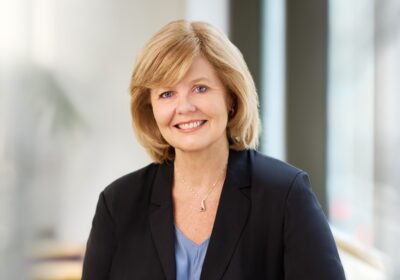
John Vastianos, CFO | Glen Eira City Council
From roads and libraries to pools and parks, Australia’s 537 councils and New Zealand’s 78 shape the places we live, and their finance leaders make calls that can stretch a generation ahead. But behind the familiar shorthand of “roads, rates and rubbish” sits a far more complex financial challenge. Glen Eira City Council CFO John Vastianos sat down with CFO Magazine A/NZ Editor, Richard McBride to talk rate caps, financial sustainability, tough trade-offs, leadership and what it takes to build for the next generation.
For a local government CFO, the numbers tell only part of the story.
Behind every budget are services people rely on, assets that may serve a community for decades and choices about how finite resources are shared between what communities expect today and what they will need tomorrow.
At Glen Eira, the scale is significant. Council serves more than 155,000 residents, manages $232 million in annual revenue and expenditure, delivers more than 120 services and looks after more than $3 billion in community assets.
For John Vastianos, Chief Financial Officer at Glen Eira City Council, that breadth is precisely what makes local government finance interesting.
“What I enjoy about local government is that finance is never just about numbers,” he says. “Behind every budget line is a real service, asset or community outcome. We are custodians of public money and community assets.”
That sense of stewardship has increasingly shaped both his career and his approach to financial leadership.
Budgets, controls and reporting remain fundamental. But the modern CFO must also help an organisation look ahead, understand its choices and make decisions that remain sustainable well beyond the next financial year.
For John, that means thinking in decades, not just reporting cycles.
A career built in local government
John’s path to the CFO role has given him a view of finance from the ground up.
He arrived at Glen Eira in 2002 after roles at James Cook University in his hometown of Townsville and at the City of Yarra. He worked his way through financial accounting, management accounting and manager of finance before stepping into the CFO role in 2016.
Today, he reports directly to the CEO as part of the executive team and sits on the executive committee of FinPro, the network for local government finance professionals.
That progression has reinforced the importance of getting the fundamentals right. Strong controls, accurate reporting and disciplined financial management are non-negotiable when dealing with public money.
But John also believes Finance creates its greatest value when it helps an organisation anticipate rather than simply respond.
That changes the questions. Not just what does it cost? but what are we trying to achieve? What choices do we have? What are the risks? What is the trade-off? And what will this decision mean over the longer term?
It also changes where Finance sits in the organisation. Finance cannot simply arrive at the end of a process to check whether the numbers add up. Increasingly, CFOs need to be part of the conversation early enough to provide evidence, test assumptions and make the financial consequences of different choices visible.
“Finance can’t just be the team at the end of the process telling people whether the numbers add up. We need to be part of the conversation earlier, helping people understand the choices, risks and trade-offs.”
For John, this is where technical expertise meets leadership. The numbers still matter, but so do judgement, communication and the ability to understand what is happening across the organisation.
More than roads, rates and rubbish
Today, John leads a finance team of around 30 people.
His portfolio extends well beyond traditional accounting. It spans financial management, treasury and investments, management and statutory reporting, payroll, rates and valuations, procurement and contracts.
Payroll supports around 1,500 employees from nurses to lifeguards at Council’s aquatic centres, across a range of enterprise agreements and awards. Rates and valuations brings in around $155 million each year in rates and charges, while procurement and contracts oversees major tenders across Council operations.
It gives Finance a line of sight across almost everything Council does. And it rarely sits still.
“It’s not a traditional accounting role. It’s not a traditional nine to five role,” John says. “There’s councillor assembly meetings at night, council meetings, community feedback sessions and engagement on the budget. You’ll be talking to someone in the street about what’s in the budget and how we’re going to afford things.”
That breadth is also something the community does not always see. The traditional perception is that councils ‘just do roads, rates and rubbish.’ In reality, Glen Eira delivers more than 120 services.
For an individual resident, Council might mean a planning permit, a maternal and child health visit or an immunisation. It might mean a library, local park, sporting facility or swimming pool. Most people understandably interact with only a fraction of what their council actually does.
“So the misconception is, where does my money go?” John says.
Much of the answer is largely invisible. Every service must be funded. Every pavilion, footpath, drain and park needs to be maintained and eventually renewed. Payroll must run. Suppliers need to be paid. Contracts must be managed. Revenue needs to be collected. And every dollar of public money needs to be traceable and withstand scrutiny.
“When it works well, it is largely invisible,” John says. “But it underpins many of the services, facilities and infrastructure that residents rely on every day.”
Planning for a generation, not a reporting cycle
Most financial reporting works in months, quarters and years. Local government sometimes needs to think much further ahead.
Glen Eira operates an annual budget with a four-year outlook and a ten-year Financial Plan. Although legislation requires the long-term plan to be redone every four years following each Council election, John and his team update it annually.
“Things are changing quite rapidly,” he says. “There could be new legislation with a financial impact, or we’re exiting a service.”
Council’s Community Vision extends to 2040, while many of the assets being planned and funded today will remain part of the community for 30, 40 or 50 years. Some will last much longer.
That is where intergenerational equity enters the conversation. A balanced budget today does not necessarily mean an organisation is financially sustainable over the long term.
Defer asset renewal, run down reserves or maintain services without sufficient ongoing funding and the immediate financial position might look easier. But the underlying cost has not disappeared. It has simply been shifted into the future.
“We should not solve today’s challenges by creating bigger problems for tomorrow,” John says. “Some of the best decisions in local government are made by people who may never fully experience the benefit themselves, because they understand they are building for future generations.”
That creates a different kind of financial conversation. What services should Council continue to provide? At what level? Which assets need to be renewed? Where could things be done differently? Are new investments affordable over their entire lives? How much financial flexibility should be retained for whatever comes next?
Those questions are increasingly at the heart of the CFO role because financial sustainability is not simply about whether the next budget balances. It is about preserving the capacity to keep making choices.
A sector at a financial crossroads
Those choices are becoming harder. Councils operate in an environment of constrained revenue growth, rising costs, increasing service expectations and significant infrastructure renewal requirements.
John’s time as CFO lines up almost exactly with the introduction of rate capping in Victoria in 2016. Glen Eira entered that environment as one of the lowest-rated councils in inner Melbourne.
“Our base was low,” John says. “Every time you do a rate increase, there’s a compounding impact on that.”
Add rising construction costs, cost shifting from other levels of government and around $55 million in income lost during COVID, and the pressure built quickly.
“The service is experienced locally,” John says, “but the financial pressure sits on the council balance sheet.”
None of those pressures operates in isolation. A new responsibility might be manageable. So might an isolated cost increase or revenue constraint. But accumulated over time, those pressures gradually reduce the financial flexibility available to respond to new priorities, renew ageing infrastructure or absorb the next shock.
For Glen Eira, an independent financial health check brought the challenge into sharper focus.
“Status quo is not an option,”
The response was not a single decision. Council exited Early Learning Centre operations, moved In Home Support into a partnership with Bayside City Council and undertook service reviews before seeking a rate cap variation.
The approved five per cent cap for 2026–27, including a 2.25 percentage point variation, went into the Strategic Asset Reserve for future projects.
“It was a stabilising measure,” he says, “not a standalone solution.”
There is rarely a single lever available to a council. Increasing rates alone will not solve the problem. Nor will simply reducing expenditure, increasing fees, borrowing more or deferring capital investment. The challenge lies in understanding how those choices interact and what they mean over time.
Five levers, one lens
That thinking has been brought together through Glen Eira’s Financial Sustainability Strategy. If there is one piece of work John is particularly proud of, it is this.
“The rate cap variation was just one of many levers that we need to pull to be financially sustainable,”
Rather than treating sustainability as an annual budgeting exercise, the FSS takes a longer view. It connects financial and strategic planning with asset management, service planning, risk, workforce capability, revenue, reserves, borrowings and productivity.
- Balancing future budgets across the full ten-year Financial Plan, not simply the next financial year.
- Boosting revenue and driving efficiency including opportunities to strengthen revenue and service reviews across the organisation.
- Strengthening reserves creating capacity to respond to future shocks and emerging priorities.
- Managing debt responsibly particularly where long-life assets will benefit future generations rather than using borrowings to support operating deficits.
- Building a sustainable funding pipeline for capital works ensuring asset renewal does not become an unfunded problem for future councils.
The significance lies not in any one lever, but in the discipline of considering them together.
Financial sustainability is not simply an expenditure problem or a revenue problem. Debt is not inherently good or bad. Reserves exist for a purpose. Capital investment creates benefits, but it also creates future obligations.
That places Glen Eira’s rate cap variation in its proper context. It was one lever within a broader strategy aimed at strengthening Council’s long-term financial position while retaining the flexibility to respond to changing community needs, future asset requirements and unforeseen pressures.
There is an important difference between balancing one year’s budget and creating a sustainable financial position. A council can achieve the first while weakening the second.
Making the difficult choices
Putting financial sustainability into practice inevitably means confronting trade-offs.
“It’s all about trade-offs,” John says.
Service reviews have been an important part of Glen Eira’s response, but John is wary of treating them simply as cost-cutting exercises. The more useful starting point is to ask: what outcome are we trying to achieve, and is there a better way to achieve it?
Sometimes the answer is process improvement. Sometimes technology changes the way a service is delivered. In other cases, it may mean reconsidering a delivery model or service level, or redirecting resources towards a higher priority.
Efficiency does not necessarily mean doing less. Done well, it means ensuring limited resources are directed towards where they create the greatest value.
Glen Eira’s rate cap variation was not simply a conversation about rates. It sat within a broader discussion about service expectations, affordability, infrastructure renewal, efficiency and Council’s long-term financial position.
For John, this is where the CFO can add particular value: not by making the policy decision, but by ensuring the financial consequences of the alternatives are visible before that decision is made.
“I’ve had to really learn the skill of storytelling and narrative writing,” John says. “It doesn’t quite come naturally to finance people.”
A spreadsheet may contain the numbers. It does not necessarily help a councillor, service leader or community member understand the choice. Numbers need context. Trade-offs need explanation.
“People may not agree with the final decision, but trust is stronger when the process is transparent, the same facts are applied to everyone and we are prepared to explain not only what we decided, but why.”
The visible and invisible sides of investment
Some of the clearest examples of long-term decision-making are the assets communities can see.
John points to the Glen Eira Sports and Aquatic Centre and the newly rebuilt Carnegie Memorial Swimming Pool, not simply as buildings but as examples of investments whose value extends well beyond the year in which they are made.
“They are places where people improve their health and wellbeing, learn new skills, participate in sport, connect with others and create lasting memories with family and friends,” he says. “What I find most rewarding is seeing long-term investments continue to deliver value many years after the original decisions were made.”
The same principle applies to libraries, sporting pavilions, parks, roads, footpaths and the many other assets communities use every day.
But for a CFO, the invisible story is every bit as important as the visible one. Behind major community infrastructure sit years of financial planning and prioritisation, asset management and decisions about reserves, borrowings and competing demands for capital.
Every new asset creates an obligation to operate, maintain and eventually renew it. The question cannot simply be whether Council can afford to build something today. It must also consider whether the organisation and future generations can afford to look after it tomorrow.
That is intergenerational equity in practical terms. Community infrastructure may be tangible. Financial capacity is not. Yet the latter determines whether an organisation can continue caring for the former and investing in what comes next.
Leadership beyond the ledger
For all the talk of strategies and long-term financial plans, John is at his most passionate when the conversation turns to people.
Leading a finance team of around 30 is not simply about meeting deadlines or producing accurate financial statements. It is about building capability, creating opportunities and helping people understand how their work contributes to the organisation as a whole.
For John, that starts with connection. He values spending time with his team, understanding how people are going and creating an environment where they feel comfortable contributing ideas and challenging the way things have always been done.
“I think there’s real value in being together and having those conversations that don’t always happen in a formal meeting. You get to know your people better, learn what’s happening across the team and create stronger connections.”
Psychological safety is an important part of that. So too is creating a workplace where people can enjoy what they do.
“Finance can naturally be quite serious because of the work we do and the responsibilities we carry. But you also need to enjoy coming to work. We work hard, but there should always be room to have a laugh together.”
Developing people is an equally important part of John’s leadership approach.
Long-serving employees bring deep organisational knowledge and experience. Newer team members bring different skills, fresh perspectives and a willingness to question established ways of working. John sees strength in bringing those perspectives together.
“I learn from my team because they’re always trying something new,” he says. “The best teams combine experience with curiosity. It is not one generation teaching another.”
For John, development also means giving people opportunities to stretch themselves, take on greater responsibility and build confidence through experience.
“Sometimes you have to give people an opportunity before they think they’re ready. Back them, give them some room and let them have a go. That’s often where the real development happens.”
A strong Finance function cannot depend on one individual. It needs people who are willing to step forward, share their expertise, challenge existing thinking and continue developing.
That philosophy reflects John’s broader view of leadership. The CFO’s job is not simply to build a strong Finance function for today. It is to develop the people, confidence and capability that will sustain it into the future.
Technology changes the work, not the purpose
That focus on developing the next generation takes on another dimension when the conversation turns to technology and artificial intelligence.
Automation, modern finance platforms, data analytics and AI are steadily changing the work finance teams do. For John, the opportunity is not simply to do the same work faster.
Technology can reduce the time finance professionals spend gathering data, processing transactions and completing repetitive work. That creates more time to analyse information, understand what it means, challenge assumptions and support better organisational decisions.
Like many finance leaders, John built his foundations through reconciliations, transaction processing and basic reporting. If technology removes that work, organisations need to think deliberately about what replaces the learning that once came with it.
“If technology removes those tasks, we need to deliberately replace the learning,” he says. “You still need finance people to interpret data and make sure the AI is correct. AI should lift the capability of the finance team. It should not remove the ladder that allows the next generation to develop.”
Nobody wants to preserve repetitive work simply because that is how previous generations learned. But removing the work without replacing the developmental experience creates a different risk.
As information becomes easier to produce, the ability to interpret it becomes more important. The value of the CFO remains in understanding context, asking the right questions, connecting financial information with organisational priorities and helping leaders navigate uncertainty.
“They’ve got to be tech savvy. They’ve got to be resilient… It’s about the adaptability and flexibility.”
Technology changes the work. It does not change the purpose.
A sector that loves to share
There is another feature of local government John believes is sometimes underestimated: its willingness to collaborate.
Without conventional shareholders or commercial competitors, councils openly exchange policies, experience and lessons learned.
“I might say to someone, do you have a policy on this? I’m about to write one but I don’t want to reinvent the wheel,” John says. “Have you built a pool? What were your lessons learned? Everyone is willing to share. It’s like a big family.”
FinPro formalises some of that collaboration through roundtables, professional development and advocacy with the Victorian Government.
“Local government is same, same, but different,” John says. “Glen Eira may use different systems to City of Yarra, but at the end of the day, the purpose of what we’re doing is the same.”
For a sector facing many of the same financial and operational pressures, that openness can be a considerable strength.
“Transferring those skills across the sector just makes us a stronger sector.”
Build capability. Share knowledge. Leave something stronger behind.
Building for the next generation
After more than two decades in local government, John’s perspective on the CFO role ultimately comes back to stewardship.
Budgets matter. So do forecasts, financial controls, audit and the disciplines that underpin a well-run organisation. But they are ultimately tools for something bigger.
The real test is whether today’s decisions leave an organisation capable of meeting tomorrow’s challenges.
That means balancing services with affordability, investment with renewal, current expectations with future obligations and ambition with financial capacity.
There will always be competing priorities. There will always be more options than resources.
The job of financial leadership is not to make those tensions disappear. It is to make them visible.
It is about bringing evidence to the table, challenging assumptions, explaining the consequences of different choices and helping the organisation retain enough financial capacity to keep making choices in the future.
The accounting matters. But the numbers themselves are not the destination. They are there to support better decisions about services, people, assets and communities.
“I love what I do,” he says. “I just want to see things through. I get very excited when something’s finished and it’s celebrated, and it’s recognised.”
For him, financial sustainability is not simply about producing one balanced budget, achieving one financial ratio or completing one strategy. It is about leaving an organisation with the capacity to keep serving its community long after the immediate financial year has passed.
“Local government is about managing trade-offs, making informed decisions with finite resources and leaving the community stronger than we found it,” John says.
“If, through the decisions we’ve made, Glen Eira is better positioned to serve future generations than it was when we inherited it,” he says, “then I would consider that one of the greatest achievements of my career.”
Related Posts