


- Author: Richard McBride, Editor CFO Magazine A NZ
- Posted: September 23, 2026
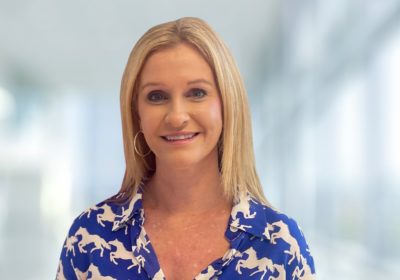
Brianna Thomas, CFO | me&u
After helping steer me&u through a major merger and onto a path of profitability, CFO Brianna Thomas is now shaping its next chapter of growth. Her own journey to the CFO role has been equally unconventional, shaped by consulting, turnarounds, motherhood, mentors and a leadership style that reflects how dramatically the role of the modern CFO is changing.
A short walk from the me&u offices in Collingwood, Melbourne, we meet in a local café to talk about the business, Brianna Thomas’s journey to CFO and what comes next.
Before we get started, there is the small matter of ordering coffee.
We scan the QR code on the table, place our orders and, appropriately enough, use me&u.
It is difficult to imagine a better demonstration of the business we are about to discuss. The technology does its job, the order disappears into the café and our conversation continues.
Today, me&u technology is used across approximately 6,000 venues globally. But the company Thomas is helping lead is increasingly looking beyond A/NZ and the QR code that made it familiar to millions of Australian hospitality customers.
It is also a very different business from the one she joined.
Thomas has lived through the capital-fuelled growth years, the sudden shift in venture markets, an intense focus on cash and profitability, the merger of Mr Yum and me&u and the integration that followed.
Now, after 12 months of profitability and three consecutive quarters of positive cash flow, the conversation has changed again.
This time it is about growth.
“Now that we’ve reached profitability, we have much more freedom,” Thomas says. “We’re entering a new chapter where we can reinvest back into the business and into growth opportunities.”
For a CFO who has spent much of the past few years helping create that freedom, it is clearly a chapter she is enjoying.
An unlikely route into the CFO chair
Thomas is not the stereotypical career accountant who spent 20 years steadily progressing towards the CFO title.
In fact, she did not originally envisage a career in finance at all.
Her undergraduate studies combined fashion and business before her career took her into consulting, including five years at EY and two years with turnaround and restructuring specialist KordaMentha.
“I loved business, but I didn’t originally see myself going down the full accounting, debits-and-credits pathway,” she says.
It was consulting that gave Thomas her commercial grounding.
At KordaMentha in particular, she saw businesses at their most vulnerable. Cash mattered. Liquidity mattered. Costs mattered. Stakeholder management mattered. Decisions had consequences and there was rarely the luxury of waiting for perfect information.
“At KordaMentha, you were often coming into a business when it was on its weakest knees,” she says. “You were looking at costs, liquidity and how to return value to shareholders.”
Ironically, Thomas subsequently moved into the scale-up world because she wanted to experience growth.
What she discovered was just how useful those turnaround skills would become.
“I wanted to join a scale-up because it was focused on growth. What I didn’t appreciate at the time was how transferable those turnaround skills would be when you’re trying to reach profitability with a fixed amount of resources.”
It is perhaps one of the most interesting elements of Thomas’s CFO story. Her career was not built around collecting the traditional prerequisites for the top finance job. It was built around solving problems.
From growth at all costs to profitability
Thomas’s introduction to scale-up life was immediate.
The business had recently completed a major Series A capital raise and was investing heavily in people, products and international growth.
Then came day one.
“Kim pulled me into a meeting room and said, ‘All right, we’re acquiring a business,’” Thomas recalls. “I remember thinking, this is going to be a very different journey from corporate, where things can move a little more slowly.”
For the first six months, the emphasis was firmly on growth.
Then the market changed.
By 2022, venture capital had undergone a dramatic reset. The era of growth at almost any cost gave way to a much harder question: when will you make money?
“The sentiment changed very quickly,” Thomas says. “It was no longer about growth and spending to capture the opportunity. It became get to profitability and do it quickly.”
For the next 18 months, runway, costs, capital allocation and the pathway to profitability became central.
Then came the decision that Thomas believes fundamentally changed the trajectory of the business: the merger between Mr Yum and me&u.
The combination delivered scale, doubled revenue and created significant synergies, but it also meant bringing together two organisations, two teams, systems and cultures.
“The merger was probably one of the most important decisions we made in getting to profitability,” Thomas says.
“The merger gave us considerably more scale and doubled our revenue”
That is a striking assessment, but also an insight into the reality of scale-up finance. Sometimes the CFO is not simply financing growth or controlling costs. The role is helping make decisions that can fundamentally alter the future of the company.
The merger also tested the human side of leadership.
“We brought the companies together very quickly,” she says. “It allowed us to take the best of both businesses and emerge with a united team that was stronger and more talented than either company had before.”
Three years on, Thomas believes the difficult work has created the platform for what comes next.
“We’re investing back into new products, which is probably why everyone joined the business in the first place. That energy and ambition are coming back. It feels like we’re getting back to our original DNA.”
The people who backed her
Thomas had grown with the business, knew its commercial drivers intimately and had already been operating across many of the issues that would eventually sit within her CFO remit.
Yet when the CFO opportunity arrived, she hesitated.
At the time, she was on maternity leave with her second child.
CEO Kim Teo approached her about stepping into the role.
“I was nervous,” Thomas admits. “I’m not from a traditional accounting background, so I was thinking about tax and audit and compliance and whether that was going to be my day-to-day.”
Teo saw it differently.
“Kim really encouraged me that I already had the skill set she was looking for. I knew the numbers, I knew the drivers of the business and I knew what we could influence.”
Then came another important call, this time from me&u Chairman Damian Smith.
Thomas recalls Smith telling her that in a business of me&u’s size, some of the best CFOs are those who have grown alongside the founders, understand the business inside out and genuinely know its metrics.
“That gave me the confidence,” she says.
It also helped Thomas redefine what being ready for the CFO role actually meant.
“The value of a CFO isn’t just getting the compliance done. It is knowing the business, understanding what drives performance and influencing what happens next.”
There is something refreshingly contemporary about Thomas’s appointment.
She did not need to pretend she knew everything. Instead, she understood where she added the greatest value and built a team around her with the technical capability and complementary strengths the function required.
Her consulting background had already taught her to be comfortable with ambiguity.
“You’re solving a broad set of problems,” she says. “You have to think in a structured way, but creatively, and manage a bunch of stakeholders. I’ve tried to bring that into the CFO role.”
More art than science
Thomas has now worked alongside Teo for around five years and describes the CEO-CFO relationship as highly collaborative.
“Kim is a very commercial CEO,” she says. “She came through investment banking and consulting, so she has enormous respect for the numbers and for finance.”
But Thomas has also learned something else from her CEO: the importance of instinct.
Getting to profitability can, at least conceptually, be relatively straightforward. Protect revenue, manage cash and attack the cost base.
Growth is less certain.
“The stage we’re in now is different,” she says. “Knowing how hard to push on certain bets versus others is much more art than science. You have to have really good instinct and back yourself.”
That feels close to the heart of Thomas’s interpretation of the contemporary CFO.
The numbers remain fundamental, but they are increasingly the starting point rather than the destination.
For Thomas, finance should be the “custodian of the insight”.
It is not enough to know what happened. Finance needs to understand why it happened, what it means and what the business should do next.
“Finance should be the custodian of the insight: the why, the so what and what the business should do next.”
Building people, not protecting territory
Perhaps the clearest window into Thomas’s leadership style comes when we discuss her finance team.
She talks about them with genuine pride.
In a scale-up, she says, there is little room for people who want to remain confined to a narrow functional lane. Finance professionals might find themselves working on a capital raise, acquisition, merger integration, new market or product launch, sometimes in remarkably quick succession.
“You need people who can wear multiple hats,” she says.
For ambitious finance professionals, Thomas likens those experiences to “grand finals”.
“You’re launching new products, entering new markets, acquiring businesses, merging businesses, raising capital. For a finance person, they’re the equivalent of a sporting athlete playing a Grand Final. In a scale-up, you can experience all of those within two years.”
But Thomas is not simply interested in what her team can deliver for her.
She wants them to grow beyond her.
When her financial controller told her that presenting the numbers was an area he needed to develop if he eventually wanted to become a CFO, Thomas handed him that responsibility at every executive leadership meeting.
“I want to make sure they’re getting all their learning opportunities,” she says. “If I’m thinking about a future beyond me&u, I would want someone who is in my team to take on my role.”
That willingness to create visibility for the people below her says plenty about her leadership.
So too does her approach to flexibility.
Now based in Brisbane with her husband and two young boys, Thomas travels regularly to Melbourne and works within a business that has embraced hybrid working. She is a strong advocate for flexibility, particularly for parents, while still believing younger finance professionals benefit enormously from spending time physically alongside colleagues early in their careers.
For Thomas, contemporary leadership is not about choosing between performance and flexibility.
It is about creating an environment where both can coexist.
What happens to Finance when AI can produce the report?
AI is already influencing both sides of Thomas’s role.
Within me&u, small teams are developing products at a speed that would previously have required considerably greater resources. For the CFO, that creates exciting opportunities but also makes capital allocation more important.
“In a world with AI, you can potentially build almost anything,” she says. “You still have to be highly strategic about where you put your energy, which bets you make and where the greatest returns are likely to come from.”
Within finance, she sees an equally profound change coming.
If AI can produce a report almost instantly, what exactly is finance there to do?
Thomas believes the answer is to become more human and more commercial.
“If a metric is declining, perhaps finance should be talking directly to customers to understand why,” she says.
She wants her team thinking more like internal consultants, combining structured problem solving with data, stakeholder management and genuine curiosity about the business.
Reporting the number will become easier.
Explaining it, challenging it and turning it into action will become more valuable.
The next horizon
With profitability established, Thomas is now helping me&u think about a considerably more ambitious future.
New reservation functionality, consumer products and international markets are all part of the opportunity ahead.
But the lessons of the past few years have not been forgotten.
As me&u explores new consumer propositions, Thomas remains focused on the fundamentals: customer acquisition cost, payback and lifetime value.
“The metrics that matter most to me as CFO are the unit economics,” she says. “If you don’t get those fundamentals right, you’re unlikely to build a profitable business.”
Finance is consequently being brought into new products from the beginning, not arriving at the end to approve or reject them.
“Finance needs to be there from day one,” Thomas says. “But you need open-minded finance people who aren’t simply going to walk into the room and say no. They need to sit alongside the founders, help build the product and make sure the commercial model is sustainable from the outset.”
It neatly encapsulates her view of the CFO role.
Not police. Not scorekeeper. Not the executive waiting at the end of the process with a red pen.
A builder.
Thomas believes me&u can potentially double or triple over the coming years, with international markets becoming a much larger part of the business.
For now, she has no desire to rush towards whatever title might come after CFO.
“This is a fun time to be the CFO of this business,” she says. “We’ve done a lot of the hard work and now I can help shape how we launch products, scale internationally and invest behind the opportunities ahead.”
Her advice for finance leaders aspiring to their first CFO role is similarly revealing.
“Think and act like a CFO before you have the title,” Thomas says.
“Be obsessed with the performance of the business. Understand why it is performing that way and which levers can improve it. Have an opinion about resource allocation, what the customer wants and where the company should reinvest to maximise growth.”
“If you’re already thinking that way, there’s a good chance someone will tap you on the shoulder.”
Back at the café, our coffees have long since arrived.
The QR code has done its job and disappeared from the experience almost as quickly as it entered it.
There is something fitting about that.
For all the discussion around AI, automation, data and technology, Thomas repeatedly returns to people, judgement and experience. Technology should remove friction. Data should create understanding. But ultimately people still need to decide what happens next.
The same could be said for the finance function she is building.
Thomas’s pathway to the CFO chair may not have been traditional, but increasingly it looks a lot like the skill set the next generation of CFOs will need.
Commercial curiosity. Judgement. Adaptability. The confidence to operate without a perfect framework. And the willingness to develop the people around you.
For Thomas and me&u, profitability was an important destination.
Now it looks much more like the starting point.
Related Posts