

- Author: Simon Jones
- Posted: August 4, 2026
SPC Global ‘18 Months Young’
Inside the CEO & CFO Partnership
Profile: Robert Iervasi & Brant Clutterbuck
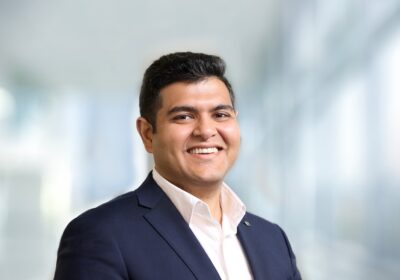
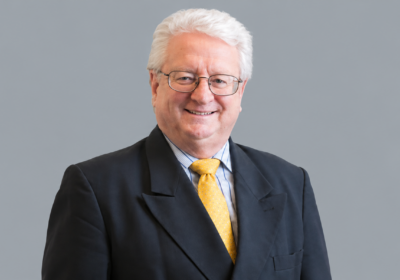
Eighteen months on from its major merger, ASX-listed food and beverage manufacturer SPC Global is a golden case study on what happens when a transformational leader – who once held the CFO seat himself – joins forces with a seasoned finance leader. Managing Director Robert Iervasi and CFO Brant Clutterbuck sat down with CFO Magazine A/NZ to talk integration, disciplined growth, C-suite personalities and the productive, but necessary, tension at the heart of their partnership.
Eighteen months young
Iervasi is careful about how he frames the company he leads. The brand ‘SPC’ has a storied history – its products sit in approximately 70% of Australian pantries – but the group around it is just burgeoning, formed in late 2024 from the merger of SPC, The Original Beverage Co., Nature One Dairy and Natural Ingredients.
“I like to talk about SPC Global being 18 months young,” Iervasi says. “While SPC has a deep heritage and a deep history within the Australian consumer and investor mindset, bringing four business divisions together under one corporate umbrella means we’re only young and we’re just finding our feet.”
What he’s proudest of is a business now split evenly between two engines. “We have a diversified business whereby 50% of our profit comes from overseas and 50% from the local market. But what they all have in common is celebrating high-quality Australia-made food and beverage products.”
The biggest surprise of the integration so far has been the international demand for certain products – something Iervasi hadn’t forecast. An Original Juice Black Label product began ranging in South Korea in February; forecasts have since climbed significantly, with two containers now shipping weekly to that market alone as Japan, China and Singapore come online.
“That’s given us a lot of belief in the future of the business,” he says.
Building a new platform from the ground up
Clutterbuck joined SPC Global around the time of the merger, and his initial focus was unglamorous but essential – governance first, execution second.
“What was apparent at that time, in bringing together four businesses, was that we needed to quickly ensure we had sound financial governance,” he says. That platform is what let the group deliver against the objectives it had issued to the market.
Asked what finance has delivered, he points to three things in particular: a finance capability fit for a listed business, reporting and governance structures that inform decisions rather than merely produce reports, and a stronger balance sheet to carry the group out of integration and into execution.
“We’re building a finance function that works with the business in order to shape decision-making going forward – not just generating reports or interpreting data.”
Discipline over shiny toys
With the board having signed off on a mid-term plan to 2030, the near-term story is all about execution. Chief among the ‘must-wins’ is reimagining the manufacturing footprint – closing the Mill Park site and moving production to a mix of owned assets and co-packers, for an annualised benefit north of $11 million. It’s also the best illustration of finance as a true business partner.
“When we first announced the closure of our Mill Park juicing site, it came with a potential capital envelope of $23 million,” Iervasi says. “We’ve been able to produce the same capability at a faster pace with only a $3 million capital envelope required.”
And for Iervasi, that’s the whole point: “I’m a big believer in – provided you’ve got access to capacity – you don’t need to own everything outright,” he says. What excites him most is “when the team, including finance, thinks outside the square and actually understands what delivers a business outcome versus getting excited about shiny toys”.
Clutterbuck is candid about the fact that capital allocation is where a CFO earns their keep – and occasionally their unpopularity.
“It’s probably one of the most important parts of the role,” he says. “You can certainly make some friends or some enemies out of those decisions on the way through.”
Chief first, finance second
But it’s the CEO–CFO relationship that truly defines SPC Global’s international ambitions. Drawing on his own years in the finance chair, Iervasi’s central lesson is about where the emphasis in the title belongs.
“One of the biggest learnings I had transitioning from a CFO, and in fact proving myself to become a CEO, was the importance of the ‘Chief’ part of the title. The ‘Finance’ part is secondary to that,” he says. “The technical capability is almost a given, because you don’t get into the CFO chair unless you have it. But the ‘Chief’ aspect is the part that makes you stand out as a future leader.”
The test he set himself before stepping up was whether he could present the company’s results “without using numbers or putting up a P&L on the screen” – in other words, telling the story of performance to anyone in the room.
Iervasi describes the top of the house as a triangle of trust between CEO, CFO and Chief HR Officer, and admits he’s usually the one testing the edges.
“I like to push the boundaries of what we potentially can and can’t do,” he says – with Clutterbuck weighing whether the timing and the return stack up. “A CFO with a good growth mindset can understand those sorts of discussions. A CFO that’s purely numbers-driven would instead say, ‘Let’s not invest because I can’t see the return straight away.’”
For Clutterbuck, working with a managing director who’s also sat in his chair is more helpful than anything else. Having worked with Iervasi before, he says, “You’re able to skip the get-to-know-you phase, and you’ve got a platform of trust and respect.” The technical is taken as a given, and the conversation can move straight to commercial value.
“Robert really does challenge me to look beyond the numbers and consider the broader drivers of long-term value creation.
Iervasi’s parting advice to any CFO with ambitions beyond the finance chair all comes back to identity over output.
“Every CFO should ask themselves, ‘What is my brand and what does it stand for?’
If you’re known as the numbers-person only, the transition to CEO will be a lot harder. CFOs need to think more about what they stand for as an individual.”
Related Posts