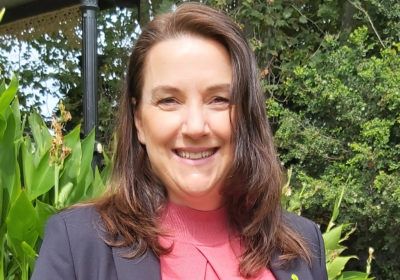


- Author: Kate McHugh Climate Sustainability Adviser
- Posted: November 24, 2026
Scenario Analysis
Are businesses getting the value out of mandatory climate disclosures?
Scenario analysis is prescribed by AASB S2. Early experience with Australia’s mandatory climate disclosures shows some organisations are missing fundamental steps and the opportunity to extract value as a result.
Australia’s first mandatory climate-related financial disclosures provide useful insights into how businesses are approaching reporting. There are lessons for the organisations preparing to follow.
Reviewing published Group 1 disclosures, I have found reports that have missed scenario selection. The nature of limited assurance means this omission is not necessarily identified through the assurance process.
This raises an important question for CFOs, company leadership and boards: are businesses undertaking meaningful climate scenario analysis, or are they simply completing another reporting obligation?
What is scenario analysis?
Under AASB S2, organisations are required to disclose information that enables users to understand the resilience of the strategy and business model to climate-related risks and opportunities under different climate states.
Reporting organisations must use climate-related scenario analysis to assess the resilience of their strategy and business model to climate-related changes, developments and uncertainties.
The disclosure must also explain how and when scenario analysis was carried out, including the scenarios and other inputs used, their sources, and the key assumptions made. Identifying the scenarios selected is central to making that disclosure meaningful.
Scenario analysis is not forecasting. It is a forward-looking exercise that uses hypothetical but plausible representations of different futures to test how a business might perform under different conditions. The process should help identify vulnerabilities and opportunities, as well as understand what strategic decisions may be required. It should inform decisions about capital allocation, investment, assets, operations and the long-term viability of the business.
Temperature outcomes are not climate scenarios
One of the more concerning gaps in the disclosures I have read is a misunderstanding of what constitutes a climate scenario.
Australian reporting entities are required under the Corporations Act to undertake scenario analysis using at least two scenarios: one consistent with limiting global average temperature increases to 1.5°C above pre-industrial levels, and another where warming well exceeds 2°C. The latter is generally understood to mean 2.5°C or higher.
These temperature outcomes are not the scenarios themselves. They are the conditions that the selected scenarios must satisfy.
AASB S2 requires an approach to climate-related scenario analysis that enables you to consider all reasonable and supportable information that is available at the reporting date without undue cost or effort. This allows an approach commensurate with an organisation’s circumstances, including its exposure to climate risks and opportunities as well as available skills, capabilities and resources.
This proportionality mechanism is not a licence to cherry-pick convenient assumptions.
There are several widely recognised families of climate scenarios that organisations can draw upon.
Three commonly used sources are:
- International Energy Agency (IEA): Scenarios examining different energy system pathways, including changes in energy supply, demand, technology and policy.
- Network for Greening the Financial System (NGFS): Scenarios developed to explore the financial and economic implications of different climate transition and physical risk pathways.
- Intergovernmental Panel on Climate Change (IPCC): Representative Concentration Pathways (RCPs) and Shared Socioeconomic Pathways (SSPs), which explore different greenhouse gas concentration and socioeconomic development pathways and their implications for the climate.
Scenario selection needs to make commercial sense
Selecting scenarios is therefore not simply a matter of finding one that represents 1.5°C warming and another that represents a higher temperature outcome. Businesses need to understand what the scenarios represent and why they are relevant to their circumstances.
The choice of scenarios used in the disclosure should be driven by the nature of the business, its exposure to climate-related risks and opportunities, and the decisions management needs to make.
For example, a business with significant exposure to energy costs, emissions regulation and changing technology may need to place particular emphasis on transition risks. A business with geographically concentrated operations, physical assets or climate-sensitive supply chains may need to examine physical climate risks more closely. Many businesses will have exposure to both.
The important question is whether the selected scenarios provide a credible basis for understanding the implications of different climate futures for the organisation.
CFOs should be able to explain why particular scenarios were selected, how they align with the organisation’s strategic risks and how the analysis considers its operations, assets, investments and broader value chain.
This is where scenario analysis needs to move beyond a technical climate exercise and become integrated with the organisation’s existing financial and strategic planning processes.
Compliance is not the same as value
A climate disclosure can receive limited assurance and still fail to demonstrate the organisation has selected appropriate climate scenarios. Indeed, some have.
Limited assurance is not a guarantee that the underlying analysis has been sufficiently robust to inform business decisions, or that management has extracted the full value available from the exercise.
Furthermore, a technically compliant report, or one designed around the notion of “minimum viable compliance”, does not necessarily mean the organisation has conducted scenario analysis that is sufficiently robust to inform business decisions.
An organisation can devote considerable resources to producing a climate disclosure, obtain external assurance and still be left with little understanding of how climate-related risks and opportunities could affect its financial performance over the short, medium and long term.
That is a missed opportunity. The objective should not simply be to produce a report that meets the disclosure requirements. It should be to use the process to challenge assumptions, test strategic resilience and improve decision-making.
Get the process right
For Group 1 reporters, the first reporting cycle has provided an opportunity to identify where their approach needs to improve. For Group 2 businesses preparing for mandatory reporting, there is an opportunity to avoid some of the same mistakes.
Scenario analysis requires an understanding of climate science, but it also requires an understanding of business strategy, financial risk and the commercial implications of different future conditions.
CFOs do not need to become climate scenario specialists. They do, however, need to ensure that the people supporting their organisation have the expertise to guide appropriate scenario selection, help interpret the results and translate them into meaningful business insights.
The real measure of a successful climate disclosure is not simply whether the report has been completed and assured. It is whether the process has helped the business better understand its risks, opportunities and resilience, and make better-informed decisions about its future.
About the Author
Kate McHugh is a climate and sustainability strategy and disclosure adviser, helping businesses integrate climate-related risks and opportunities into commercial strategy and financial decision-making. Through Climate Advantage, she works with organisations to build the knowledge and capability required for effective AASB S2 reporting.
To learn more visit: www.katemchugh.net
Related Posts