


- Author: Tom Smith
- Posted: June 22, 2026
CFOs Are Exhausted – But Time Management Isn’t the Answer
If you feel like you are running on fumes, you are not alone.
In 2025, 56 percent of leaders in the finance sector hit burnout, and global CFO turnovers reached a seven-year high. A harsh reality driven largely by heavier workloads and what leadership advisory firm Russell Reynolds Associates describes plainly as role fatigue.
When confronted with these numbers, the default corporate response is almost always the same: better time management. Calendar your priorities. Decline unnecessary meetings. Optimize your schedule. We treat the exhaustion of our people, and ourselves, as a math problem to be solved with a more efficient spreadsheet.
But time management cannot fix burnout, because burnout is not a time management problem. It is an energy and identity problem.
The Energy Deficit
We are culturally conditioned to equate hard work with success. The instinct is to invest more time and effort to overcome obstacles rather than simply remove them. This approach invites trouble because energy, unlike time, is a finite resource that depletes as you use it. Think of it like the battery on your phone.
You start the day with a full charge, and as you navigate the relentless pace of your role, such as the complex decisions, the competing priorities, the endless demands, you deplete that charge. The more friction you encounter, the faster it drains. And the less you have, the less likely you are to operate at your peak. Composure disappears, decision-making deteriorates and productivity collapses. Research confirms this with 79 percent of executives reporting that high stress negatively affects their decision-making quality.
The solution is not more hours. It is less friction.
A simple starting point is structuring your environment to make the work you want to do easier to do. Asking yourself: How could this be simpler? How could this be less draining? Small structural changes compound into significant energy savings over time.
The second, more significant approach is rest, and it is strategy that many finance leaders neglect. Downtime is not a reward for finishing. It is a performance strategy.
Practically every ancient society understood that work and rest are not opposing forces but equal partners. The science is unambiguous: leaders who integrate genuine recovery into their day make better decisions, sustain higher performance, and lead more effectively. Yet 73 percent of C-level executives are currently overworked without sufficient rest. We cannot lead well if we do not rest well.
The Identity Crisis
Managing energy is critical. But it only addresses half the equation. The deeper, and far less discussed, driver of executive burnout is a crisis of identity. For many high-achieving professionals, identity and professional output are inextricably intertwined. We forge our sense of self through the stories we tell about how to survive and succeed. For finance leaders, those stories are often rooted in a deep need to be seen as capable, competent, and indispensable. When your identity is entirely wrapped up in your performance, the stakes for every decision become impossibly high. You are no longer just doing a job. You are defending your worth. Harvard Business School professor Arthur C. Brooks describes this as “an identity based on fear” and notes for high achievers, the fear of professional failure registers as an existential threat.
This self-protective story forces you to stay “always on.” It coerces you to push through exhaustion because stepping back feels like a threat to who you are. The pressure to maintain this curated version of yourself depletes your emotional resources far faster than any workload ever could. And it is invisible which is precisely why it is so dangerous. To break the cycle, you need to do something most busy people resist: slow down and examine the stories running your life. Are they still true? Are they still serving you? The story that made you indispensable in your thirties may be the story burning you out in your forties. Detaching your inherent value from your professional performance is not weakness. It is the most strategically intelligent thing you can do for your longevity and your leadership.
The Path Forward
Burnout will not be solved by a new productivity app or a better calendar system. It requires a fundamental shift in how you view your resources and yourself. Stop wearing your busyness as a badge of honour.
Start treating your energy as the strategic asset it is. Reduce friction. Prioritize genuine rest. And do the harder work of untangling your identity from your job title, because the leader who knows who they are beyond their role is the one who endures.
The finance function demands your best thinking. You cannot give it what it needs if you are running on empty.
About the Author:
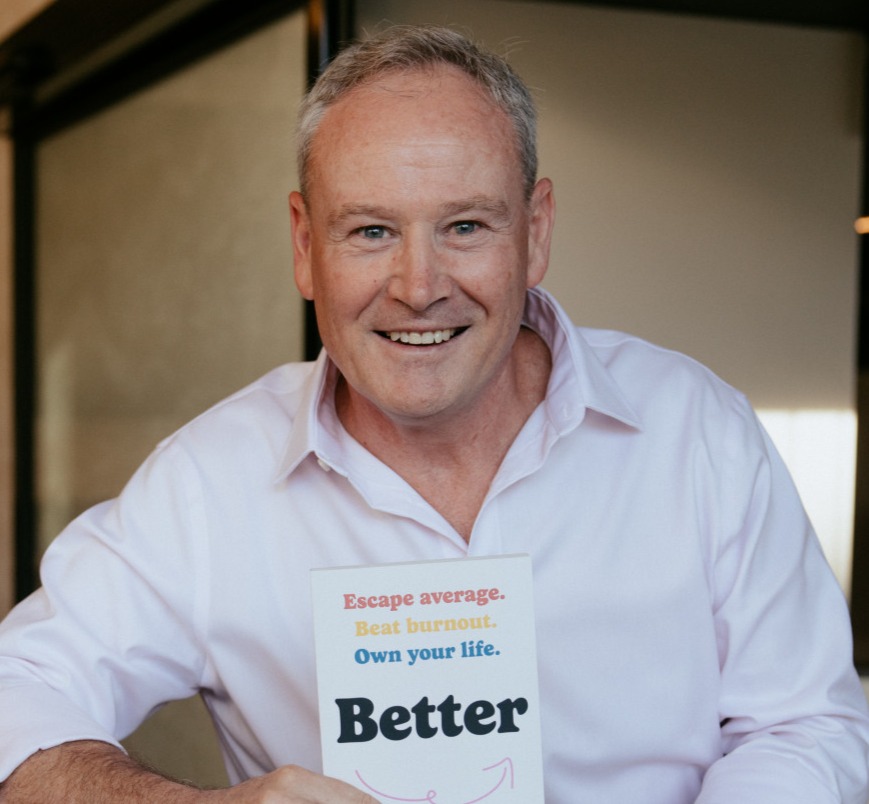
Andrew Horsfield, author of Better, is a consultant who helps leaders in business, elite sport and education tackle the challenges of human performance. Clients turn to Andrew when they need to turn stuckness into strength. He is the host of the Messy Middle podcast and founder of the Better Life Lab. A learning community for forward thinking leaders.
Find out more at: andrewhorsfield.com
Related Posts