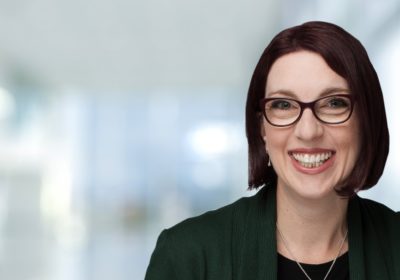



- Author: Johanna Leggatt
- Posted: January 28, 2026
Women Shouldn’t Apologise For Being Mothers
Finance leader Rupa Chopra has climbed the ladder at a global food giant, while maintaining the boundaries that allow her to thrive as both a mother and a leader
Most weekdays around 5:30pm, Rupa Chopra makes an effort to step away from her laptop to spend an hour with her two-year-old daughter.
As Head of Finance A/NZ at pladis Group, her role often stretches into evenings to align with global teams. It doesn’t always happen, but carving out this time with her daughter reflects her commitment to family—even in a demanding, international role.
“At first, I never had boundaries in place around work and life, but I realised it was diluting the two so that if I was with my daughter, I’d be thinking about work and if I was with work, I’d be thinking about my daughter,” Chopra tells CFO Magazine A/NZ.
Many leaders, she notes, labour under the misconception that instituting boundaries may reflect a lack of commitment to the role – but nothing could be farther from the truth.
“I think boundaries actually help you to perform better, not worse,” Chopra says.
“I have my hour of time with my daughter and she gets the best of me, and then when she goes to bed, pladis gets the best of me.”
Chopra has other strategies to maintain focus: she tries to close her laptop by 10pm each night, she meditates for 10 to 15 minutes each day and gets up at 6am most days to hit the gym.
“Going to the gym really clears my mind. I’m not doing it for any reason but to have a better mindset.”
Maintaining Boundaries as a Mother and Leader
Chopra took five months’ maternity leave from her role before returning to work full-time. Like many women transitioning back to work after giving birth, she found the process challenging at first.
“I went through all of that self-doubt and I felt as if I had complete brain fog, as if my mind wasn’t working properly,” she says. “I felt like I wasn’t performing to the best of my ability.”
What made a difference, Chopra says, was her supportive team.
“I was very open and honest about things that were going on at home and how I was feeling, but obviously, in a very professional way,” she says.
“But I think the openness allowed us to create a psychologically safe environment for me and for others.”
Support from senior leaders also made a big difference.
“They were really supportive, they gave me the confidence to come back to work and feel really good about myself,” she says.
It’s important, Chopra says, that women realise they can be both mothers and leaders at the same time.
“They’re not mutually exclusive,” she notes. “I think you can be a leader and a mother, but you do have to draw very clear boundaries. “You also have to be able to go into mum mode and accept that you are in mum mode – and not be checking emails and getting stressed.”
From Strawberry-Picking Plans to pladis Down Under
pladis Group employs a 16,000-strong global workforce and is home to popular brands McVitie’s, GODIVA and Ülker, as well as regional brands Jacob’s, Go Ahead, Flipz, Turtles, BN, and Verkade.
Chopra, who grew up in the UK, joined the pladis team in London as a global procurement finance manager on contract, having worked in tax accounting for fashion brand Burberry and consulting giant PwC.
“I loved numbers and I love mathematics, so tax accounting felt like a very natural path to go down,” she says.
Her family was made up of small business owners and Chopra was interested in “how numbers can influence strategy”. However, it soon became clear that tax was not the path for her.
“I couldn’t see myself there long-term,” Chopra says.
“It didn’t quite fit with my personality: I’m a people’s person and I like to be able to have breadth, as opposed to being niche and working in one area.”
Procurement finance at pladis was a better fit, a “great stepping stone”, but in 2018 Chopra quit her job to do the “typical English thing” and move Down Under.
“I had just come back from a holiday in Australia and I loved it, so I thought I would go strawberry picking in Australia,” she says.
Instead, she was approached by the company’s global CFO, who asked her if she would be interested in a maternity leave finance manager role in Sydney, where the company had a small team.
The rest is history.
“I was 29 when I took the role,” Chopra says.
“It was a big step up, moving from tax and procurement finance into end-to-end finance, covering commercial finance, controls, governance, all of it. I said, ‘Give me six months to show you what I can do.’ It was a challenge I embraced, and ultimately, it went really well.
“I am not very good at manual labour, either, so strawberry picking wouldn’t have been great.”
The Power of Mentors
Over the past seven years, Chopra and her team have built pladis ANZ into a thriving hub.
“In the very beginning, it was a challenging entity, but with a lot of potential,” she says.
“We rebuilt a lot of the forecasting processes, financial controls, governance team, which basically allowed me to help the team to focus on more of the value-add pricing strategies and understanding strategically where we could grow this business.”
Chopra credits the success to the tight-knit team culture, as well as the transformative quality of mentorship. She mentors colleagues and has her own designated inhouse mentor in the UK, as part of pladis’ formal mentorship program. Chopra meets monthly with her mentor, a process that has been a huge salve during her return to work.
“What I love about (our conversations) is that she’s been through that phase of having young kids,” Chopra says.
“She’s very open and honest about the challenges of it; I’m not just seeing the success, and that’s simply it. She is telling me what happens in between.”
Unofficially, Chopra’s Dad is also one of her biggest mentors as well.
“He’s always told me to go with my dreams and my passions,” she says.
“And I think that’s always been at the forefront of my mind to always do things that make me happy, and to always be striving to be the best version of myself.”
Chopra also wants other women to realise their worth as both mothers and leaders.
“If I was to give one piece of advice it would be: don’t apologise for being a mother,” she says.
“I think we do that quite a lot, and I even hear that from my colleagues, ‘I’m so sorry. My child was sick’. Let’s not apologise for that.”
Women, Chopra argues, have a huge range of competencies – not in spite of being women, but because if it.
“We are very capable as women, we have a lot of great skill sets that we can bring to the boardroom, including emotional intelligence, the way in which we deal with things, the way in which we influence,” she says.
“The main thing is to just believe in yourself.”
Related Posts