



- Author: Claire Gray Executive Coach Author
- Posted: November 17, 2025
The Ripple of Accountability
A CFO’s Strategic Lever for Performance
CFOs are now well-established strategic partners in shaping culture, performance, and organisational resilience. However, often many overlook one of the most powerful tools at their disposal.
Accountability.
I call it the ripple of accountability. Like a stone dropped into still water, it starts small but impacts everything around it.
When CFOs intentionally embed accountability within their teams and broader organisation, the performance uplift is tangible, engagement improves, and trust within teams improves.
Yet, accountability often gets a bad rap, equated with micromanagement or blame. In reality, when done well, it’s the opposite. It fosters ownership, builds capability, and enables sustainable performance.
Let’s unpack how CFOs can use accountability as a lever to lead culture and results from the finance function outward.
The Leadership Challenge: Accountability Avoidance
In my work with CFOs and finance leaders, one common frustration emerges: team members not following through, repeated errors and missed deadlines. And often, leaders avoid addressing these issues because they feel uncomfortable. They worry they’ll come across as too harsh, impact relationships or they’ve tried before and it didn’t work.
This discomfort leads to what I call ‘accountability avoidance.’ Deadlines are pushed, expectations remain vague, standards slip or we end up doing it for team members. The ripple? Performance suffers, frustration builds, and the high-performing culture you’re aiming for never quite materialises.
Accountability isn’t about being tough. It’s about being clear.
The Ripple Starts With You
Finance teams often work in high-stakes environments with little margin for error. But high performance doesn’t come from pressure alone, it comes from trust, standards, and shared ownership. And this begins with the CFO.
If your team sees you modelling accountability—owning mistakes, following through, providing feedback, and setting clear goals—they’ll mirror it. Accountability isn’t a directive; it needs to be role modelled.
Ask yourself:
Am I taking ownership for my deliverables?
What do I do when I miss a deadline or a deliverable?
How transparent and consistent am I with my accountabilities?
Clarity Before Accountability
You can’t hold people accountable for what you haven’t clearly articulated. In my book Thriving Leaders, I share the 4Cs to accountability framework, which helps leaders diagnose where accountability breaks down:
- Capability – Does the person have the skills and knowledge to do what’s required?
- Clear Expectations – Are the expectations, success metrics and timelines explicit?
- Check-in – Have you built in progress reviews, coaching and support?
- Communicate Outcomes – Is feedback shared on what was done well and what missed the mark?
Most accountability failures can be traced back to a gap in one of these four areas. CFOs who build these checkpoints into their team operations see better alignment and fewer surprises.
Ask yourself:
Do I set and communicate clear expectations?
Do I create space for feedback and reflection?
Am I consistent in how I respond to missed expectations?
Your answers shape the accountability norms of your team.
Collective Accountability
Collective accountability is where true team alignment lives. In finance teams, where deadlines are tight and competing priorities are the norm, it’s easy for individuals to focus only on their patch. But high-performing teams lift their gaze. They move from “my teams tasks” to “our outcomes.” When collective accountability is strong, team members proactively support each other, surface risks early, and prioritise shared goals over individual wins. This mindset is especially crucial when finance must collaborate across functions, whether with operations, sales, people & culture or strategy. It’s about enabling enterprise-wide decisions through trust, clarity and joint ownership.
Moving From Compliance to Commitment
Finance functions are often viewed as control centres. But when accountability is driven solely by compliance and “ticking a box”, it breeds defensiveness and blame. True cultural accountability, however, comes from commitment.
This is where CFOs can lead differently. Instead of framing accountability as “Did you meet the metric?”, ask: What got in the way of meeting this deadline? What can we learn from this? “What support do you need to meet this goal?”
It’s a coaching approach that positions accountability as growth, not punishment. And in my experience working with senior leaders, it’s what distinguishes high-performing teams from the rest.
The Business Case for Accountability
Why should CFOs care about all this? Because accountability drives results.
Research consistently shows that cultures with high accountability and psychological safety see:
Greater employee engagement
Increased retention and internal career progression
Improved performance outcomes
Better collaboration across departments
In finance specifically, accountability reduces error rates, improves forecasting accuracy, and accelerates project delivery—all of which impact the bottom line.
And it scales. When the finance team leads by example, the ripple of accountability reaches across the organisation.
Practical Actions for CFOs
If you want to create a culture of accountability in your finance function, here are three places to start:
Be the Standard – Role model follow-through, transparency, and constructive feedback. Your consistency sets the tone for your team.
Use the 4Cs – Diagnose where accountability is breaking down and adjust your leadership approach accordingly.
Reward Ownership – Celebrate people who step up, and work across teams. Ownership is a mindset.
Final Thought
The ripple of accountability starts with a single act of clarity, reinforced through consistent leadership. As a CFO, you have the unique position of influence to set the tone for how accountability is understood and practiced across the business. Done right, it drives not just compliance, but commitment, culture and commercial success.
Lead the ripple. Be clear on shared outcomes within your team. Build relationships across functions to create a culture of accountability.
If you want to find out more about creating a culture of accountability, check out Claire Gray’s new book Thriving Teams: When Teams Unite, Align and Achieve.
About the Author
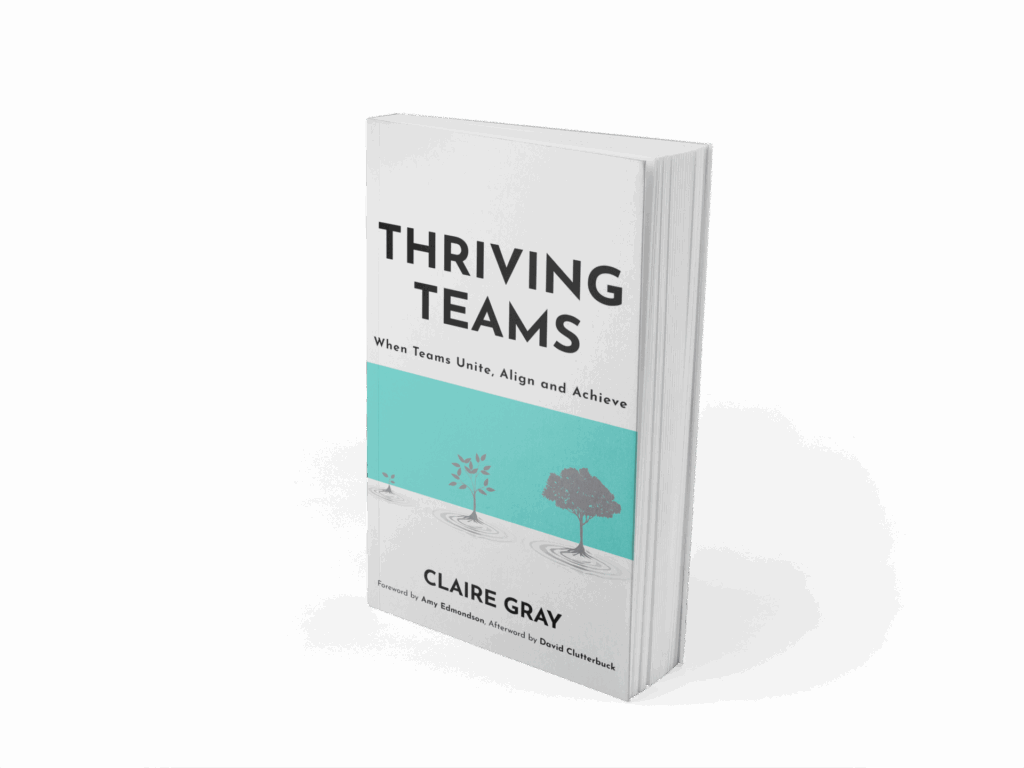
Claire Gray is a Leadership & Team Facilitator, Executive Coach and Author of two books: Thriving Leaders: Learn the Skills to Lead Confidently and Thriving Teams: When Teams Unite, Align and Achieve. Through her business, Thriving Culture, she works with organisations to build confident leaders, cohesive teams and cultures where people can thrive. Claire also hosts the Thriving Leaders Podcast, where she interviews global thought leaders and executives.
Learn more at www.thrivingculture.com.au
Related Posts