

- Author: George Hazim
- Posted: June 15, 2026
The Finance Behind the Science
The history of biotech is littered with promising therapies that never reached patients.
Some fail because the science was wrong. Others fail because funding ran out before the science had a chance to prove itself.
For Australian biotech company Actinogen Medical, the coming months represent a defining period as it advances Xanamem, its novel cortisol-targeting treatment for Alzheimer’s disease, through the pivotal XanaMIA Phase 2b/3 clinical trial program. Alongside the main study, the company is also progressing its Open Label Extension program, designed to provide additional long-term safety and efficacy data.
While much of the focus naturally falls on the scientists, clinicians and researchers leading the program, another challenge is unfolding behind the scenes.
That challenge is financial.
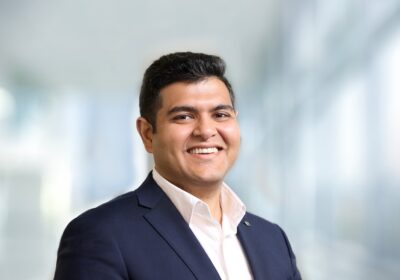
At the centre of it sits Chief Financial Officer; Will Souter.
Since joining Actinogen in February 2024, Souter has become responsible for ensuring the company remains adequately funded, operationally disciplined and strategically positioned as it navigates one of the most demanding periods in its corporate history.
His task is straightforward to describe but considerably harder to execute – keeping the company funded long enough for the science to succeed.
That reality is particularly acute in Alzheimer’s disease, where drug development is notoriously expensive and time consuming. Clinical trials often run for years, regulatory requirements are extensive, and meaningful efficacy data can take considerable time to emerge.
For Actinogen, the challenge is heightened because Xanamem represents a different approach to Alzheimer’s treatment.
While much of the industry has focused on therapies targeting amyloid plaques, Xanamem is designed to reduce excess cortisol activity in the brain – a factor increasingly associated with cognitive decline and neurodegeneration.
Actinogen’s November XanaMIA readout is expected to be a game-changer for the company as it seeks to demonstrate that targeting cortisol may offer a viable alternative treatment pathway for Alzheimer’s disease.
Helping guide the company through this period is a leadership partnership that combines scientific expertise with financial discipline.
Chief Executive Officer Dr Steven Gourlay brings decades of pharmaceutical development, healthcare venture and clinical experience, while Souter provides capital markets expertise, financial stewardship and operational oversight. Together they balance scientific ambition with commercial discipline – Gourlay focused on advancing the science and Souter ensuring the organisation has the resources required to execute its strategy.
Since arriving at Actinogen, Souter has focused heavily on strengthening the company’s financial position.
Over the past two years, Actinogen has completed three capital raisings, generating approximately AUD$40m in new capital.
The company has also secured R&D rebate loan facilities worth up to AUD$14m and obtained approximately AUD$20m in R&D tax rebates from the Australian Taxation Office.
Together, these initiatives have strengthened Actinogen’s balance sheet at a time when many biotech companies globally have faced increasingly challenging funding conditions.
The importance of that financial discipline becomes clearer when viewed through the lens of external analyst coverage.
Actinogen is currently covered by both Canaccord Genuity and Edison Investment Research. While their valuation methodologies differ, both recognise the significance of the upcoming XanaMIA trial and the implications a successful outcome could have for the company.
Canaccord Genuity initiated coverage of Actinogen in November 2025 and outlined several reasons for its constructive outlook. The broker pointed to evidence of strong brain penetration and target engagement by Xanamem, encouraging earlier clinical findings and the company’s use of pTau181 biomarker selection to identify patients most likely to respond to treatment.
Subsequent Canaccord updates maintained that positive outlook following completion of patient enrolment and, later, the successful passage of a pre-specified interim futility analysis. The broker noted that clearing such a hurdle is significant in Alzheimer’s disease, a therapeutic area where many development programs fail before reaching final readout.
Canaccord has also highlighted the commercial potential of Xanamem should the program ultimately prove successful, forecasting peak sales of approximately US$1.8bn while noting the advantages of a once-daily oral treatment and the potential applicability of the cortisol hypothesis beyond Alzheimer’s disease.
Edison Investment Research has similarly highlighted the commercial potential of Xanamem while acknowledging the significant risks inherent in neurological drug development.
For Souter, however, analyst forecasts are not the objective.
They simply reinforce the importance of ensuring the company is financially prepared to reach its next major milestone.
Whether future valuations ultimately prove accurate will depend on the clinical data. His role is making sure the company reaches that point with sufficient resources, financial flexibility and investor support.
Raising capital, however, is only part of the equation.
One of the less visible but equally important aspects of Souter’s role involves building the financial systems and governance frameworks that allow management and the board to make informed decisions.
Over the past two years he has strengthened budgeting processes, cash-flow forecasting and financial reporting systems, improving visibility across the organisation as it manages multiple clinical programs and development activities.
For development-stage biotech companies, poor capital allocation or inadequate forecasting can quickly undermine years of scientific work.
Every funding decision matters.
Every expenditure must be justified.
Every milestone carries financial implications that can influence future strategic options.
Souter’s professional background has equipped him well for those demands.
Before joining Actinogen, he held senior leadership positions across biotech, diagnostics, corporate finance and advisory businesses.
As Chief Financial Officer of Atomo Diagnostics, he helped guide the company through its ASX listing and transition into a publicly listed healthcare business.
Prior to that, he spent more than a decade with corporate advisory firm RFC Ambrian, where he led and advised on mergers and acquisitions, capital raisings and public market transactions across Australia and the United Kingdom.
He began his career at PwC, developing expertise in restructuring, transaction advisory and corporate turnaround situations.
The breadth of that experience has proven valuable at Actinogen.
Today, Souter’s responsibilities extend well beyond traditional finance functions.
He oversees investor relations, governance, risk management, audit processes and broader operational activities while acting as a key adviser to the board and executive leadership team.
The role requires him to engage regularly with investors, regulators, advisers and stakeholders while ensuring the organisation remains focused on its long-term objectives.
That balancing act has become increasingly important as capital markets grow more selective.
The biotech sector remains challenging, with investors demanding both scientific credibility and financial discipline before committing capital.
Companies are being judged not only on the quality of their data but also on their ability to deploy capital efficiently, communicate a credible development strategy and demonstrate sound governance.
Maintaining investor support throughout the XanaMIA program has therefore become an important part of Actinogen’s broader development strategy.
Souter has played a central role in that effort, helping shareholders understand the company’s funding position, regulatory pathway and approach to risk management.
As Actinogen moves closer to delivering what could be the one of the most important clinical data readouts in its history, attention will remain firmly focused on Xanamem and the patients it hopes to help.
Yet behind every major biotech program sits a team responsible for ensuring the science has the opportunity to succeed.
For Souter, that contribution is not measured in laboratory discoveries or clinical breakthroughs.
It is measured in creating the financial runway that allows innovation to continue.
While Gourlay leads the scientific pursuit of a potential new treatment pathway for Alzheimer’s disease, Souter’s role is to ensure the company reaches the point where the clinical data can ultimately speak for itself.
Before a medicine can change lives, someone has to make sure the company developing it can afford to finish the journey.
Related Posts