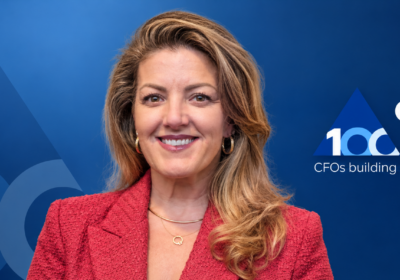


- Author: Tāne Hunter Systems Scientist, Author Founder, Future Crunch
- Posted: April 10, 2026
The Cost of Being Decisive
Why decision fatigue is now a financial risk and what CFOs can do about it.
Decisiveness, the ability to hold complexity, relentless forward motion. These are the qualities that got you to the CFO chair.
They are also the same qualities that make you most vulnerable to decision fatigue. Not because high performers are weak. Because they rarely notice the tank is empty until the decisions have already been made.
In Full Stack Human, my co-author Dr Dara Simkin and I draw on writer Michael Simmons’ concept of Achievement Syndrome: the shift from achievement as something you do to something you are. When your identity is fused to your performance, protecting your cognitive capacity feels like weakness. That is precisely when the degradation begins, invisibly, systematically, and at measurable financial cost.
This is not another call to meditate more or sleep better. Decision fatigue is a quantifiable business risk. The CFOs who manage it best treat it as a design problem, not a willpower problem.
The financial evidence
In 2021, researchers Tobias Baer and Simone Schnall published a landmark study in Royal Society Open Science that put a dollar figure on cognitive depletion in finance for the first time. Analysing 26,501 credit restructuring decisions at a major bank, they found approval rates fell toward midday as officers fatigued, then recovered after a break. The financial cost of those midday dips exceeded nine times the average monthly salary of an individual credit officer, in a single month. The cases did not change. The cognitive capacity of the people reviewing them did.
The often-cited 2011 Israeli parole study by Danziger, Levav and Avnaim-Pesso tells a similar story: parole approvals dropped from around 65% to near zero as sessions wore on, then rebounded after breaks. The study has attracted legitimate methodological debate, and that nuance matters. But the pattern is consistent with a large body of research. Under sustained cognitive load, people default to the easier option. In finance, the easier option is rarely the right one.
For CFOs making capital allocation, risk, and transformation decisions, the stakes are orders of magnitude higher than a loan restructuring. This problem is not theoretical. It is hiding in your afternoon calendar.
Decision fatigue doesn’t announce itself. It arrives as a shorter meeting, a deferred call, a familiar solution chosen over an optimal one.
The AI paradox
There is an uncomfortable truth about AI that rarely gets said plainly: for most CFOs right now, it is making decision fatigue worse, not better.
Every AI tool generates outputs requiring human review. Every refined dashboard creates new alerts to triage. Every scenario model produces more options to evaluate. In Full Stack Human, we call this the information diet problem. The issue is not a lack of good information. It is consuming far more of it than our cognitive systems were designed to process. More data does not mean better decisions. It often means more decisions about which data matters, made by brains that are already tired of deciding.
The CFOs navigating this well are not necessarily those with the most sophisticated AI stack. They are the ones who have been most deliberate about what they choose not to process themselves.
This is a design problem
Most organisations treat decision fatigue as a personal failing. Build resilience. Sleep more. These are not bad ideas, but they treat symptoms while leaving the system intact.
Research on financial analysts is instructive. A 2023 study in the Journal of Accounting Research found that analysts actively managed decision fatigue by scheduling their most consequential forecasting earlier in the day, when cognitive resources were freshest. The same principle applies to the CFO role. Sequencing is a strategic act, not a scheduling preference.
The question is what to actually do. Three structural changes make the most difference, and none of them are about working harder.
1. Build a decision filter, not a to-do list
Before each week, sort your decisions into three categories: those that genuinely require your judgment, those that can be made one level down with 80% of the quality, and those that should not reach you at all. That third category is usually the largest, and the most quietly exhausting. Standing criteria, clear delegation thresholds, and pre-agreed approval frameworks remove the ambiguity that consumes cognitive fuel without producing anything useful in return.
2. Protect your first 90 minutes
Every piece of neuroscience on prefrontal cortex performance points the same direction: executive function peaks early and degrades progressively across the day. Scheduling a capital allocation decision at 4pm is a design flaw, not a scheduling inconvenience. Reserve the first 90 minutes of your working day for the decisions that shape outcomes. Treat that window the same way you treat a board commitment: non-negotiable and protected.
3. Audit your information diet quarterly
Ask honestly: what am I consuming that generates more decisions rather than fewer? Which dashboards, AI tools, and alerts are adding cognitive load without adding decision clarity? This one is counterintuitive for data-driven leaders. But trimming what enters your cognitive system is as important as improving how you process it. The goal is not to be less informed. It is to be more deliberate about what earns your attention.
The first step, and the one Achievement Syndrome makes most difficult, is recognising that protecting your cognitive capacity is not a concession to limitation. It is the highest-leverage thing you can do for your organisation’s decision quality.
Decision fatigue is finite. Your solutions aren’t.
Decision fatigue is not going away. The volume, velocity and complexity of decisions CFOs face will continue to intensify. The question is whether you treat that reality as a personal challenge to overcome, or a system design problem to solve.
You cannot eliminate cognitive depletion. But you can architect around it. Build frameworks that absorb the low-stakes calls so your judgment is available for the high-stakes ones. Delegate not to reduce accountability, but to preserve it where it matters most.
The CFOs who lead effectively in 2026 will not just be the most experienced or best informed. They will be the ones who understand that decision quality is not only about having the right data. It is about having the cognitive capacity to use it.
And that capacity, while finite, is yours to protect.

About the Author
Tāne Hunter is co-author of Full Stack Human: The Mindset Upgrade You Need to Stay Human in a World Ruled by Technology (Wiley, 2026). He is a systems scientist and founder of Future Crunch.
To learn more visit: www.fullstackhumanbook.com
Related Posts