

- Author: Johanna Leggatt
- Posted: May 18, 2026
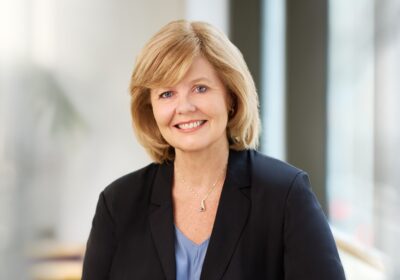
Rising Star CFO Award Winner > Jane Kuang
‘Don’t Wait Until You Feel Ready’
BHP executive Jane Kuang reflects on career stretch moments, hard-won leadership lessons and the advice from her father that still guides her.
If there were one piece of advice that BHP’s Jane Kuang could give younger female finance leaders, it would be not to wait until they feel confident before tackling a new opportunity or challenge.
Kuang, who recently stepped into the role of vice president of operational services at mining giant BHP, says growth often comes through “backing yourself”.
“Don’t wait until you feel ready because you probably never will,” she tells CFO Magazine.
“When the opportunity comes, just take it, even if it feels like it’s a stretch… you actually learn the most when it is a stretch target.”
This is especially true of female finance leaders, Kuang notes, who may underestimate the value of their views or the weight of their contribution.
“Diversity of thinking is very critical in decision making, so don’t underestimate your perspectives, and always speak up.”
Early Learnings
Nevertheless, Kuang knows what it’s like to feel overwhelmed by role scope. Early in her career she stepped into a challenging chief of staff role for an executive leader at Rio Tinto where she worked at the time.
“I remember about a month into the role, sitting at my desk and feeling really overwhelmed and genuinely questioning myself: can I really do this?” she says.
“And what really daunted me about that particular role was the breadth. Suddenly I had to know about health and safety, I had to know about operations and costs, transformations, legal, external affairs — you name it.”
Kuang took a break over Christmas and realised two things that she has since carried with her throughout her career: first, that sometimes a holiday can do the world of good and, secondly, she didn’t need to know all the answers.
“I realised my role was to learn quickly and to help people connect the dots and bring clarity to a complex situation,” she says.
“I succeeded not because I had all the answers but because I had the ability to work things through and operate in a much broader and more complex environment.”
Her recent shift into running operations has been another example of saying “yes” before she felt 100 per cent ready.
“Being in charge of a large workforce, providing maintenance services, providing some load and haul services across operations in Australia, is a big ask,” she says.
“But a lot of the commercial acumen and finance knowledge I have gathered through the last 20 years or so helps me enormously to be laser-focused on what really matters.”
Star on the Rise
Kuang’s efforts are clearly being noticed. She was recently awarded the Rising Star award at the CFO of the Year Awards, in recognition of her leading a $2.9 billion deal with US private equity giant BlackRock to sell a stake in BHP’s West Australian electricity network.
Even when Kuang is not facilitating large-scale projects such as the BlackRock deal, no two days are the same. To cope with the high-velocity sector that is mining, Kuang applies a distinct framework, what she calls a “very simple matrix” to triage her task load.
“It’s about urgency versus importance – the typical two-by-two matrix,” she says.
“It’s about determining what is important and urgent, and what is urgent but just noise, which usually means I can delegate it rather than let it consume my time.”
This ability to delegate has been hard-won. Kuang concedes that early on in her career she tried to do too much, but these days she knows how and when to rely on the resources of her team.
“In the early part of my career, I probably always tried to do too much by myself,” she says.
“But over time I realised it’s less about how much I do and more about how much I can enable other people to do.”
Kuang admits that she, like most modern finance leaders, “like to work at pace”, but will often force herself to pause before replying to an email, even if she thinks she has the answer or needs to keep the process moving.
“Sometimes you receive an important email, and you feel that urge that you have to respond straight away,” she says.
“The best advice I ever heard is from my father who said: just sit on it overnight. Send it tomorrow. If it’s not life threatening, it can wait.”
Taking a moment to pause before responding can save a headache down the track, Kuang notes.
“Sometimes patching an idea or fixing something after you’ve made the wrong decision actually takes a lot more energy than the 12 hours you just could have waited to respond,” she says.
It’s not the only thing her father taught her. Both Kuang’s parents are engineers, and her father has also helped build and manage teams.
“My father taught me about the importance of a work ethic,” she says.
“He also stressed the importance of always caring about people. One thing he said to me was, ‘Jane, when you’re doing business, take all the emotions out, but remember, it’s all about the people’.”
Managing Stress and Difficult Conversations
Such advice has come in handy during the inevitable occasions when Kuang has had to manage difficult conversations, such as during a company restructure involving role changes and forced redundancies.
Kuang recalls one such occasion, in which the company embarked on a restructure that was based on business fundamentals rather than individual or team performance.
Even when a restructure is driven by business considerations, it still feels deeply personal for the people affected, Kuang notes.
“This meant my focus was to be transparent about the ‘why’, because the decision in itself may not be agreed with by everyone, but they all understandably want to know the ‘why’,” Kuang says.
“Once people know the why, they have time to internalise it and understand it and also come to terms with the final decision being made.”
Kuang also prioritises honesty in moments like these.
“These are never easy conversations. But what I’ve learned through those moments is
the importance of honesty and also respect. Instead of trying to make it comfortable for others, it’s about being honest with them and respecting them.”
As Kuang has progressed in her career, she has naturally reframed what success looks like. Whereas in her 20s, it was much more about external achievements and positive performance reviews, these days it is much more outward-directed.
“It’s a lot less about me compared to 20 years ago,” she adds.
“Now I think it’s more about the impact that I can have on the team, on the business, and the people.”
Kuang’s life outside of work is also a steadying influence. She admits to being a cheerful “uber driver” for her daughter, and enjoys cooking Asian food for her family, including her parents.
“I also usually have a group of trusted friends, a few whom I’ve known for decades, and I feel comfortable calling and seeking advice from,” she says.
“Spending time with people outside of work is important to redirect your energy, and when you come back, sometimes things are not as stressful as you thought, and it also changes your perspective.”
Related Posts