

- Author: Johanna Leggatt
- Posted: February 4, 2026
Race To The Top
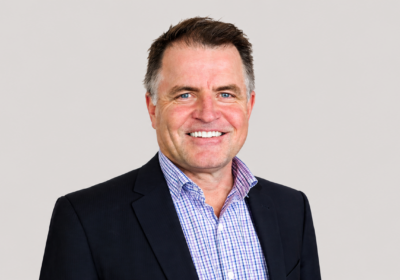
CFO Profile: Race Strauss, CFO | Virgin Australia
Virgin Australia CFO Race Strauss considers the most challenging periods of his career as among his best, which may just be the secret to his success.
When Virgin Australia CFO Race Strauss swapped the world of consumer goods for the thrust and parry of the aviation sector, some thought he was crazy.
At the time, Strauss was the vice president of finance for South-East Asia and Australasia at consumer goods giant Unilever, but, in 2012, he decided to take a leap across the aisle to a new sector and a new challenge as CFO for Jetstar, part of the Qantas Group.
“A lot of people told me not to do it, they thought switching sectors was risky and I think they thought I wouldn’t make it,” he says.
“Funnily enough, that made me more determined to do it.”
The move has well and truly paid off, with Strauss following up his role at Jetstar with stints as CFO at Qantas and, most recently, Virgin Australia, where he has been for the last three years.
“If you can survive in aviation, you can survive anywhere,” Strauss says.
“We’re not the biggest airline, of course, but there’s 8,000 of us, and what it takes to actually get those planes leaving on time, with the right crew and the right fuel and the right pilots, it is so incredibly complicated.”
Although Strauss stepped away from aviation during the pandemic to become CFO of the A2 Milk Company, he returned to the sector in 2022 to join Virgin Australia.
“You realise that aviation is so complex, that when you’re not doing it, it’s actually quite unexciting.”
In fact, it’s the high-stakes nature of aviation, the constant challenge and volatility, that enlivens Strauss.
“When you wake up in the morning, you might have a plan of what you want to do, but you have no idea where your day will go,” he says.
“I truly love the fact that it’s never a boring day.”
Stress Testing Through an IPO
Strauss and his team were put to the test during Virgin Australia’s first tilt at re-listing on the ASX in 2023, which involved marketing to domestic and overseas investors and considerable preparation in the lead up to the IPO.
However, Virgin Australia’s owners Bain Capital decided to halt the IPO in late 2023, citing unfavourable market conditions, and instead the company focused on a 25 percent strategic investment by Qatar Airways Group.
“We had to move quickly and reorganise the team, and once that was completed we needed to pivot again to the IPO,” Strauss says.
The team pulled the prospectus together for a second tilt at the ASX listing, and the IPO moved to the next stage in early 2025.
Then, as fate would have it, the US president, Donald Trump, announced a wave of global tariffs.
“And of course, in our business, that completely changed the financial outlook,” Strauss says.
“We had to rewrite parts of the prospectus and totally change the forecast. So we did that, but then the night before we were due to ring the bell at the ASX, Iran bombed a US airbase in Qatar.”
That raised some questions overnight, but Straus notes that ultimately, there was confidence the market would look through the event. The airline formally listed on the ASX on 24 June 2025.
“When I look back at that period, I think it was truly the best experience of my life,” Strauss says.
“It was almost as if every experience I’d ever had up until that point was used to deliver that successful project.”
Strauss says any stress he felt was largely in relation to his team.
“Where the stress is for me is in protecting the team from stress so that they can focus,” he says.
“I truly enjoy that ability to move to be agile, to be resilient, to stay confident, to stay positive and to bring everyone on the journey.”
Managing the Load
In addition to overseeing the classic CFO duties, Strauss looks after fleet leasing, fleet buying, and procurement, Treasury, all commercial negotiations with airports, facilities and the IT portfolio, including the considerable duties related to cyber management.
So, how does he stay focused and productive in a sector notorious for change?
“You get battle-hardened for sure, and experience is a great thing,” he says.
“But I would also say that I have a fantastic team and what you’re really doing as a CFO is leading them.”
Strauss doesn’t pretend to be a specialist in each area of oversight, but instead guides each team—be it leasing or procurement—by “knowing when to get out of their way”.
“I think you learn this with experience because early on, you probably think you’ve got to do it all, and you get frazzled,” he says.
“I mean, the reality is, my job really is helping others, leading others, supporting them, backing them, but not doing their job for them, while also knowing when they’re struggling so you can jump into their world and help.”
Team diversification matters, too, he notes and “it’s not just diversification of gender, it’s diversification of mind because everyone thinks differently”.
Strauss also makes time for exercise—especially when he is under pressure.
“I just find you think more laterally, bigger picture, when you exercise,” he says.
“If I’m really under stress, then I make sure I don’t drop any exercise even though it’s really easy to do.”
Family support is crucial as well.
“It provides the bedrock and support when things are tough and the stress is high,” he says.
“Your family is just such a great support during those periods.”
Ethical decision-making
Strauss’s role as a fellow at the Vincent Fairfax Fellowship (VFF), underpins his approach to leadership is his role. He describes this as giving him with a “north star” when making crucial decisions.
Run by the Cranlana Centre for Ethical Leadership, the VFF program is an intensive year-long course designed to equip senior leaders with the tools to create an ethical framework for tough decision-making.
“If I look back, I wish I’d done it a bit earlier, because when I was working with Unilever, I was working in China and in Vietnam, and in some of these countries, you do run into ethical issues,” he says.
“Now, when I really have to make business trade-offs and think about serious issues, it has offered me a good way to work things out.”
Strauss also finds the framework useful when making practical decisions that impact staff or those around him.
“You always need to make tough decisions and there’s always consequences to your decisions,” he says.
“And I find the framework gives you a good way to understand the consequences of your decisions on others; how they affect people’s lives.”
When it comes to balancing shareholder requirements with the capital-intensive infrastructure service that is aviation, Strauss doesn’t think they’re mutually exclusive.
“We know we want to be Australia’s most loved airline and to do that, we’ve got to provide a great value product with great value service,” he says.
“We know if we do that, we will get value for our shareholders. So it’s not as much as a trade-off, as you might think.
“If you provide a good service, and you’re not too expensive, you’re a value carrier, and you run it on time, and everybody enjoys the experience, then guests will keep coming back. And when they keep coming back, then your shareholders are making the money they are wanting to make.”
Related Posts