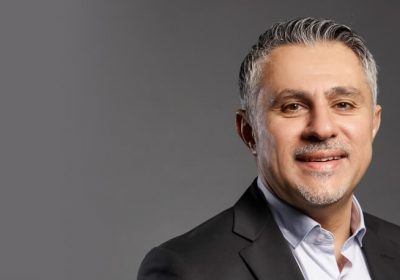



- Author: Kate McHugh Fractional Sustainability Leader
- Posted: March 19, 2026
Mandatory Climate Related Financial Disclosures require CFOs to work outside their comfort zone
CFOs are accustomed to working with a reasonable amount of certainty. Metrics and numbers are bread and butter. Revenue. Costs. Margin. EBITDA. Profits… And now emissions metrics.
Even budgets, though a forecast, are determined from historical data with some adjustments based on ambition and anticipated market variables for the short term.
Financial reporting focuses on performance data. Lag indicators.
But the Australian Sustainability Reporting Standards (ASRS) mandatory climate disclosure asks for something fundamentally different.
Yes, the reporting framework asks for emissions metrics. Scope 1, 2 and 3 emissions are asked for. And any targets and mechanisms to achieve them need to be reported. While this is new and somewhat difficult work to get right, it is metrics based.
And it is where CFOs get stuck.
However, that’s just a small part of the reporting that’s required. The real work is discovering the resilience of the business model considering the impacts of climate change (under two trajectories) and articulating the risk management and strategy to deal with it.
In essence, operational risk, supply chain risk, and revenue risk are all included in this disclosure. Understanding these usually begins with some qualitative assessment before the data is identified.
While CFOs are not expected to become climate experts, they are expected to report on the physical impacts of climate change on the business model. This requires an understanding of the physical risks of climate change, and how they are expected to emerge across the operating environment. An off the shelf product doesn’t work, because most businesses have different operating environments – locations, type of work, workforce location, inventory, etc., all come into play.
Equally CFOs are not expected to become innovation clairvoyants. However, anticipation of the impact of a decarbonising economy is also part of the disclosure. There are first order risks from products and services sold, and there are second order risks through suppliers and customers.
What happens to your business model at 1.5°C of warming? And at 2.5°C? These are not questions which can be answered by lag indicators.
Reporting on governance is also required. Most CFOs are accustomed to governance statements in the annual report. It’s important to point out however, governance is subject to an assurance requirement. This means evidence that a governance structure is in place, and evidence climate is considered in the company’s risk and strategy. Meaning, this work can’t be outsourced to AI in its entirety.
Here’s where it gets tricky.
When reporting, it’s not possible to spit out a table of numbers and say, “here’s how we performed against expectations.” A narrative about the business strategy and risk management must be drafted, balancing a need to disclose resilience of a business model, without wanting to give competitive insight away, while walking a tightrope of moderate certainty of economic and physical forecasting over two warming scenarios.
The ASRS framework requires a CFO to demonstrate that their board has genuinely grappled with what climate change means for their specific business, under two trajectories, and made documented, defensible judgments as a result. That is not a data exercise. It is a reasoning exercise, and it requires a different kind of support than most mid-market CFOs have been offered.
Experience and expertise is required to ensure what someone might like to say, matches what the evidentiary trail says is happening in the business and will hold up against assurance. Equally statements like “we will buy more electric vehicles as our fleet is renewed” isn’t a strategy or a risk management approach and exposes a business as having an immature approach to climate related financial disclosures.
For CFOs navigating this for the first time, the most useful reframe is this:
ASRS is not asking you to predict the future. It is asking you to demonstrate that you have thought seriously about it, documented that thinking, and built governance structures that will allow you to revisit and update it over time. That is well within a CFO’s capability, with the right support.
A consistent pattern is emerging on approaches to climate related financial disclosures. Those companies that undertake the reporting framework resentfully, seeking only to comply with the minimum effort miss real opportunities to look at the business model in light of a material risk.
On the other hand, businesses that approach the disclosure with a growth mindset, curious to what they might learn about climate change impacts, and its mitigation pathways, are identifying real opportunities to de-risk assets and investments, as well as emerging opportunities.
Climate related financial disclosures might be thrust upon your business, but the approach you take is entirely up to you. And if you’re trying to avoid falling within the thresholds, it’s time to ask what is the business afraid to find out?
About the Author | Kate McHugh

Kate is a fractional sustainability executive helping businesses adapt to evolving climate related financial disclosures, and strategic climate considerations.
She brings ASX level climate and sustainability expertise to Australian businesses embarking on climate (and broader sustainability) considerations relevant to a company’s purpose and priorities.
To learn more visit: www.KateMcHugh.net
Connect with Kate: https://www.linkedin.com/in/katemchughh/
Related Posts