

- Author: Johanna Leggatt
- Posted: March 25, 2026
CFO of the Year (ASX) > Richard Richards
The ‘Daily Adventure’ of the Listed Space
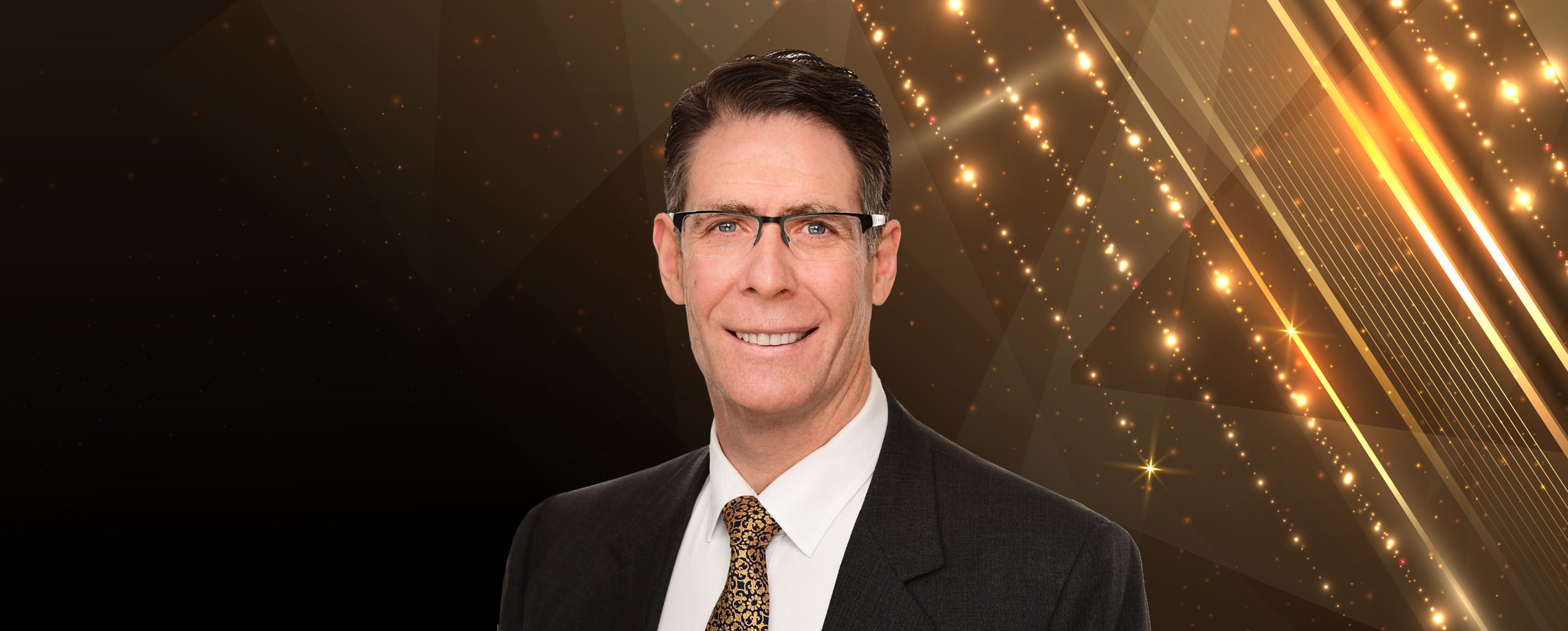
In the first of our series celebrating the 2026 CFO Award winners, CFO Magazine A/NZ’s Johanna Leggatt sat down with Richard Richards, CFO of Seven Group Holdings Ltd about risk, resilience and why finance leadership is about far more than reporting numbers.
Richard Richards’ ascent into the role of CFO of the ASX-listed Seven Group Holdings (SGH Ltd) began over a coffee in 2013.
Not just any coffee, mind you, but a sit-down with the company’s CEO, the legendary former Woodside boss Don Voelte, who was known in some quarters as “high voltage Voelte”.
Voelte was looking for his next CFO, but rather than rely on a formal hiring process, he quietly canvassed three trusted senior contacts: Eve Howell, then CEO at Apache Energy; John Meacock, then CSO at Deloitte; and Geoff Dixon, former CEO at Qantas, with whom Richards had previously crossed paths.
Despite none of them having spoken to Richards about the role, all three independently recommended him.
“Unbeknownst to me, they all proffered my name and Don cold-called me and said, ‘Come in for a coffee’.”
Auspicious Beginnings
The timing was perfect. Richards had already been told he was “CFO-ready”, but after interviewing for other senior finance roles, the same obstacle kept surfacing: boards wanted someone who had already held the job he was seeking — namely, a listed-company CFO role.
By the time the CFO role at SGH came up, Richards had spent several years as a deputy CFO and in senior finance roles for the likes of Qantas and Downer. He was also an alumnus of Deloitte’s CFO Vantage program for high-potential finance leaders.
Voelte took one look at Richards’ background and liked what he saw.
“Whereas a number of other people wanted someone to have been a direct CFO in a listed environment, Don was looking at what I’d done over the past 15 years and was quite happy to take that chance,” he says.
Voelte, Richards recalls, was honest about the volatility of the job.
He said that at Woodside he had gone through five CFOs in 10 years and once described finance chiefs as being “like PEZ out of a PEZ dispenser – you push one head in, and another one will pop out”.
“He was straight up and down, and confident around his own ability and experience, so from his perspective to the extent that I had any shortcomings or deficiencies, he figured he could cover those,” Richards says.
Richards joined SGH “laterally” on a prove-yourself basis almost 13 years ago.
The Culture and the Deals
Voelte has since retired from his CEO role, but Richards considers the time he spent working with him as one of the most formative phases of his career.
“He very much grew up in that oil and gas school of North America, and he was tough as nails, but he was considered, structured and methodical.”
And despite Voelte’s public reputation as a “fireball”, Richards says “nothing could be further from the truth”.
“He was a thorough gentleman,” he says.
If Voelte gave Richards his break, the decade that followed under Chief Executive Ryan Stokes gave him the dealmaking canvas on which to make the role his own.
Richards describes Stokes as someone who “leads from the front”.
“That is infectious, to work with people who have that level of energy and interest in driving outcomes, and it’s certainly given me what I would describe as the ultimate Meccano set to play with,” he says.
Over the past decade, Stokes has reshaped SGH from a sprawling conglomerate into a more focused industrial services business: buying the other half of Coates from private equity, acquiring Boral and now pursuing BlueScope Steel.
“He (Ryan Stokes) never stops,” Richards says.
“It means I get to work with a CEO who’s both financially literate and has that growth orientation and a vision for where he wants to take that business. That makes it much easier for me, because I’ve just got to try and keep up with him.”
That approach also shapes SGH’s boardroom culture.
“Ryan is a big believer in never allowing a banker into your boardroom,” Richards says. “He wants the person who’s going to be responsible for delivering the outcome to be in the boardroom.”
Awards and Recognition
Richards’ contribution to SGH was most recently recognised at the inaugural CFO Awards, sponsored by the Group of 100 and Johnson Partners, where he won the Best ASX CFO Award 2026.
“From my perspective, it was lovely to be nominated, particularly given the quality of the other nominees from CBA, Goodman Group and Pepper Money,” Richards says.
Richards accepted the award on his colleagues’ behalf, adding that a lot of the credit for what has been delivered at SGH “goes to my team”.
“They are the most capable finance team who consistently excel and deliver. Collectively, they have enabled SGH to consistently outperform,” he said.
“Their tenacity, intellectual curiosity, technical prowess and integrity inspire me every day.”
During the ceremony, Richards also paid tribute to the influence of Colin Storrie, former Qantas and AMP CFO, who helped Richards broaden his skills and set an example for leadership.
“Attempting to emulate his intellectual curiosity coupled with his unwavering integrity, has always provided me with a true north for which I will be eternally grateful,” he told the crowd.
Taking Risks
One of the many highlights of Richards’ career at SGH has been “working in a company willing to do things that most listed businesses would not attempt”.
“Every day is genuinely a new adventure,” he says.
In particular, he points to the sale of SGH’s Caterpillar dealership in China for more than half a billion dollars – and the successful repatriation of that cash back to Australia – as well as the Coates deal and the full takeover of Boral.
The China transaction, he says, was unusual not only because SGH made money in a tough market, but because it was able to bring the capital home and redeploy it into Australia.
The Coates transaction was also a significant test of execution, requiring the refinancing of roughly $1.2 billion in just 60 days.
And then came Boral, which he frames as one of the defining deals of his SGH career.
“There’s not too many $6 billion market cap companies that would take on effectively acquiring another $6 billion market cap company,” he says.
SGH put in place an $8 billion bridge finance facility to launch its bid for Boral, a move Richards says required “a lot of strength and fortitude” from Stokes.
That appetite for ambitious deals has not disappeared.
SGH is now pursuing BlueScope Steel in partnership with Steel Dynamics – another example, Richards notes, of the group’s willingness to pursue opportunities others might judge too difficult to tackle.
Beyond Reporting
Richards has long held the view that the best organisations tap a CFO’s capabilities well beyond mere reporting.
“I’ve always worked in businesses where the role of the CFO has very much been as a strategic thought leader, and strategy, in most of the organisations I’ve worked for, reported into the CFO,” he says.
Richards also views AI as crucial in reinforcing the CFO’s role as strategic partner rather than scorekeeper.
“AI will be an enabler of better decision making,” he says.
“People talk in terms of judgement and judgments are often referred to as a gut feel, and some people have great judgement; others may not.
“But ultimately, the tools will allow people to access better information, which will then inform their judgement.”
While that will mean fewer people “turning the handle”, Richards argues that technology still requires finance leaders to interpret the data.
“It still requires someone to sit down and think, ‘Well, what do we do with that information? How do we change the outcome’?”
Pressure and Perspective
For all the scale of the SGH transactions, Richards says he does not usually “manifest stress”.
Part of that, he says, comes down to culture. SGH is solution-focused, he notes, rather than blame-focused.
“If something doesn’t work, we pivot and work out what we need to do to achieve an outcome,” he says.
He also credits routine and family for keeping him grounded.
“I train every morning and until recently my wife and two daughters and I all boxed together,” he says.
Having two adult daughters, he says, is also a reminder that however intense work may be, it is not the whole world.
“They’re more concerned with their university or social lives,” he says.
“So you realise that in the greater scheme of the world, do you work to live or live to work?’
Richards adds that institutional pressure—the kind that comes from boards, markets, or his CEO whom he “respects deeply” – is both a motivator and a driver to deliver results.
“Resilience and true technical capability are honed in the crucible of significant transactions, staring down investors, and managing banks through near death experiences,” Richards says.
“Those experiences don’t just build resilience, they calibrate judgment. You know what a real problem looks like because you’ve stood in front of one. That’s qualitatively different from someone who has managed complexity in benign conditions.”
Related Posts