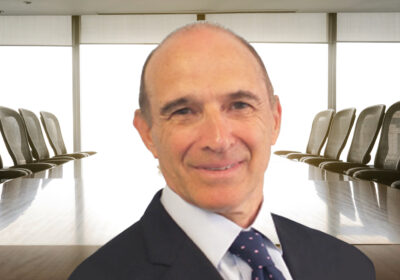


- Author: Jon Brett NED Corporate Travel (CTM) & Chair of the Audit & Risk Committee
- Posted: July 21, 2025
Certainty in an Uncertain Environment
If there’s one thing the last few years have taught us, it’s that uncertainty is no longer the exception – it is the rule. Economic volatility, geopolitical tensions, cyber threats, climate risk, and the rise of generative AI have made uncertainty the default setting for global business. Markets swing on headlines, regulations shift overnight, and once-in-a-generation events now seem to happen every quarter.
CFOs are no longer just managing numbers; they are managing ambiguity, rising expectations, and an often rapidly changing business landscape. The pressure isn’t simply to adapt—it’s to provide calm, credible leadership when nothing feels stable. In this environment, certainty doesn’t come from perfect forecasts or flawless plans.
CFOs aren’t just expected to respond – they are expected to lead, calmly and credibly through the unknown.
Gone are the days when financial planning was a neatly annualised process. Today’s CFO must navigate a world in which forecasts can become obsolete overnight. Certainty, ironically, is often no longer found in the numbers – it’s found in how we lead through the unknown.
There is something quietly reassuring about walking into a board meeting during a time of crisis and finding the CEO and CFO calm, measured and in control – when everything outside the room is shifting.
Certainty comes from Discipline, Not Prediction
In times of uncertainty, the CFO’s role as custodian of financial discipline becomes more critical than ever. This means rigorously stress-testing budgets, building real flexibility into business models, and ensuring capital is allocated according to a clear, adaptable strategy—not just hopeful projections.
When this discipline is absent, businesses often overcommit to fixed costs, underprice risk, or stretch working capital too thin – only to be caught off guard when conditions shift.
Airbnb – A case in point
When global travel collapsed in early 2020, CFO Dave Stephenson didn’t wait for perfect information—he acted. The company cut non-essential spending, preserved liquidity, and raised emergency capital early. Rather than betting on when travel would return, they built a model resilient enough to handle whatever came next. That discipline laid the foundation for one of the most successful IPOs of the pandemic era.
Corporate Travel Management
I was privileged to be on the board of Corporate Travel Management when COVID-19 first struck. At the outset, many of us assumed it was a short-term disruption—something akin to a severe flu that would pass within weeks. But reality quickly proved otherwise. When Australia closed its borders and global travel came to an abrupt halt, the situation escalated dramatically.
Within days, the company’s exceptional management team—led by the remarkable Jamie Pherous—developed a clear action plan to cut costs, preserve cash, and protect the business. The dividend was suspended early, and decisive steps were taken to ensure liquidity.
While many competitors were forced into capital raisings simply to survive, Corporate Travel Management maintained a strong balance sheet and emerged from the crisis with a war chest. This enabled the company not only to weather the storm, but to pursue strategic acquisitions and expand its global footprint, as the market began to recover.
Data is only as good as the systems behind it
In a crisis, executives demand instant clarity—but if your systems are stitched together with spreadsheets, outdated reports, and selective filters, the truth gets lost in translation. In fact, the illusion of certainty can be more dangerous than uncertainty itself—it breeds false confidence and delayed reactions at exactly the wrong moment.
Medibank
Consider Medibank’s cyberattack in 2022. Within hours, CFO Mark Rogers had to make high-stakes decisions: suspend trading, provision $25 million for remediation, and manage a barrage of regulatory and investor scrutiny. There was no time for perfect reports or polished presentations—just an urgent need for fast, trusted, end-to-end visibility.
The most certain advantage is agility
Companies that thrive in unpredictable environments are not the most stable—they’re the most agile. And agility is not chaos; it’s structured responsiveness.
Fortescue Metals
Fortescue Metals Group is a prime example. Former CFO, Ian Wells navigated through extreme fluctuations in global iron ore prices by embedding discipline into every layer of the business. Rather than trying to guess commodity cycles, Fortescue focuses relentlessly on cost-per-tonne efficiency and scenario planning. This allows them to maintain dividend discipline, progress major projects, and preserve strategic clarity regardless of market shocks.
Certainty Is Cultural
Boards look to the CFO not just for numbers, but for confidence. Not false assurance, but steady leadership that acknowledges risk while projecting resilience. A CFO who models calm, disciplined adaptability can set the tone for an entire organisation.
Cochlear – Culture as a Compass During Crisis
When the pandemic disrupted global surgeries and hospital access in 2020, Cochlear—a leader in hearing implant technology—faced a sudden drop in revenue. Yet instead of reactive cost-cutting or strategic panic, the company leaned on its deeply embedded culture of patient-first thinking and long-term stewardship.
Under then-CFO Neville Mitchell and CEO Dig Howitt, Cochlear didn’t rush to slash R&D or exit markets. Instead, they reassured stakeholders by preserving critical investment in innovation, supporting staff continuity, and maintaining close relationships with surgeons and audiologists globally—even during months of hospital shutdowns.
At the same time, they moved swiftly to raise $880 million in equity – not out of desperation, but to ensure they had the balance sheet strength to continue growing, innovating, and acquiring (they picked up rival Oticon Medical in 2022).
Conclusion
Uncertainty isn’t going away. But that doesn’t mean CFOs should simply brace for impact. Certainty, in this environment, is not a fixed point—it’s a posture. A way of thinking, A way of leading. It is a commitment to discipline, agility, trusted data, and cultural steadiness.
The best CFOs don’t wait for certainty. They create it.
About the Author: Jon Brett
Jon Brett is a Non-Executive Director of Corporate Travel (CTM) and Chair of the Audit and Risk Committee. He also serves as a Non-Executive Director of Raiz Invest (RZI).
Jon is also the author of the very successful podcast series The Taking of Vocus, chronicling the extraordinary rise of Vocus, what went wrong with the M2 merger, and the eventual privatization of Vocus. The podcast is accessible via his LinkedIn profile.
Jon’s book, The Taking of Vocus, is available on Kindle.
For more information on Jon Brett, visit his LinkedIn Profile
Related Posts