

- Author: Simon Jones
- Posted: August 11, 2026
The Rise of the Finance Hybrid
Why CFOs Need a New Mindset in the Age of AI
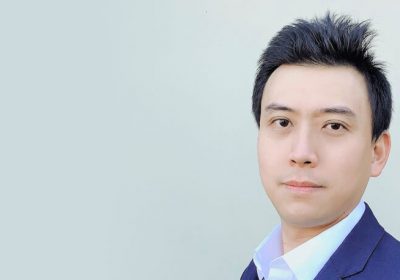
Rachel Wong doesn’t have a conventional finance CV these days – which is entirely the point.
A CFO and COO to startups and scale-ups, part-time venture capitalist, coach and now founder of The Finance Hybrid, she’s built a career by stepping outside the tried-and-tested finance lane. Ahead of her appearance at the CFO Magazine A/NZ, Sydney CFO Horizons Symposium on Tuesday 18th August, she made a case that finance leaders will need a new mindset – and skillset – to thrive in the next decade and beyond.
Stepping stones, not a ladder
Rachel’s beginnings started out textbook: private enterprise audit at KPMG, where she earned her CA. “It’s a very traditional corporate beginning,” she says. But she left almost as soon as the qualification was in hand, and what’s followed has been anything but linear, diving into a string of roles across new industries.
“I refer to it as stepping stones,” she says. “Every new role has to be strategically something that gets me closer to where I want to go.”
For an aspiring tech-company CFO who has never worked in tech, the smart move isn’t to leap straight there – too many new lanes at once – but instead to change one variable at a time until the target role is reachable.
Along the way she’s said yes to things a finance person, on paper, should have no business doing – packing boxes at luggage brand July, as well as stepping in as its retail manager when COVID shut the stores.
“Exposure equals growth,” she says. “If you’re just behind your desk delivering numbers, your ability to influence different departments won’t be as strong as somebody who has gone out of their way to be uncomfortable.”
Why now for The Finance Hybrid
Five years ago, Rachel says, The Finance Hybrid wouldn’t have been possible, least of all for her: “I was still struggling with the finance identity myself. Every finance leadership role was still heavily spreadsheets. I felt like I didn’t belong, but I had no other choice. Portfolio careers weren’t really a thing back then.”
Having since assembled exactly that – “part operator, part VC, part coach, part Substack writer, part on a mission to break this accounting and finance stereotype” – she wants to show others it can be done. And central to everything is that AI has reset the board for everyone all at once.
“For both a twenty-year CFO and a first-time CFO, AI is new for everybody. You’re all on a level playing field. If I can do it, anybody can.”
At its heart, her venture “gives finance professionals permission to do more than just numbers”. To Wong, being a hybrid is less a job title than a mindset: “[It’s about] being able to rise above finance and speak the language of the marketing, tech and sales teams. Speaking finance to non-finance people.”
Treat the bots like team members
When Rachel runs her hands-on AI workshops, she says there’s a near-instant change in the room. People arrive “too busy to play with AI” and leave an hour later asking, “Can it do this and can it do that?”
The biggest problem she sees is under-use: “Most people ask AI one thing, get an average answer and then they quit. But I treat my bots as if they are actual humans and team members. I have personas and skills built in so they have a brain.”
That includes a “clone” persona trained on her own audit-honed standards to review work before it reaches her. “[Most people] mind-numbingly go ‘do this for me’. But if you say ‘do this for me as if you were this person’, that’s already enough to take it 50% further.
And the payoff is capacity: “I’m only able to have this portfolio career because I use AI for the grunt work. Separate out all the spreadsheet and review work and you could easily gain 20% to 50% more capacity, which is good for your role and good for your career.”
The part of the job that disappears
Rachel is convinced the CFO role is durable and won’t be going away anytime soon.
“You’re hired to solve problems unique to that business, so you can’t just copy and paste,” she says. And the CFO–CEO relationship will continue to stay stubbornly human: “You’re almost an unofficial co-founder.”
What won’t survive is a large chunk of the traditional workload: “The bit that will disappear is the analysis of the past. Automated month-end reporting, dashboards and metrics can all be done very quickly with AI.
“Right now, a CFO’s time is very much 50% in the past, 50% in the future. But imagine getting rid of that 50% and focusing all your energy on good business decisions – pivots, new products. The rate of growth could be quite exponential.”
A wake-up call without the fear factor
Rachel wants the more established generation of accountants to know that digging their heels in and refusing to engage with AI could be their downfall.
“Old-school accountants are rewarded for being black and white – accounting standards, materiality, compliance,” she says. “Guess what? AI loves black and white. So, if the way you think and operate is very black and white, you’re potentially in trouble.”
The safest ground, then, is the territory that rules-based thinkers have long avoided: “Applying judgment, taking risks towards unknown outcomes, asking ‘what if?’”
But it’s not just the older generation that should be focusing their attention on AI. The new crowd coming through could end up facing the opposite risk.
“The younger generation are fast to adapt,” she says. “But the fundamentals and critical thinking will be lacking if they rely solely on AI as the output. So don’t just take the first response. Push back, ask why. If everybody relies on AI, the models spit out the same response, and then you’ve lost your competitive advantage.”
CFO Horizons: Where to start with your AI journey?
Rachel has three things every current or aspiring CFO should try, spread across three horizons:
This week: Ask one question of everything. “My six-word AI hack is: ‘Can AI help me with this?’ Most of the time the answer is yes. And if it’s no, ask the tool how it can help before you write it off.”
This quarter: Automate one recurring task. “It took me five months to automate month-end with the tools I had. Now you could do it in a quarter. The key is to keep iterating.”
This financial year: Build something you never thought possible. Rachel built her own website with no coding experience at all: “Just me and Claude Code, back and forth. The pain in the process is how you learn.”
To learn more about Rachel and the Finance Hybrid connect with her on LinkedIn or visit:
Related Posts