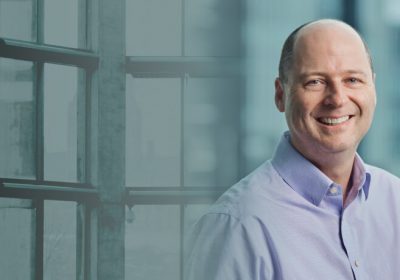



- Author: James Solomons
- Posted: August 11, 2026
Built by Accountants, for Accountants: Now in the Age of AI
In Conversation: Mike Whitmire & CFO Magazine A/NZ
During a recent visit to Australia, FloQast Co-Founder & CEO Mike Whitmire sat down with CFO Magazine A/NZ’s James Solomons in their Sydney offices to talk about what AI really means for the accounting profession – and why organisations rushing to automate without a control framework could end up paying for it come audit time.
James: Mike, Welcome back to Australia! Can you give us a picture of where FloQast stands in ANZ right now – the team size, your customer base, and the growth you’ve seen since formally entering the market?
Mike: It’s been a lot of fun building out the Australian operation. We’ve had some great tenured leaders and team members make the move from the US to help build out the team in Sydney. The foundation they’ve laid has made a real difference in how we’ve been able to scale our presence here.. Today we’re sitting at around 25 people, and as you can see, we have a solid office with plenty of room to grow – and growth is very much the plan for this territory in the coming year. Overall, it’s been a really healthy trajectory, one we’re proud of and committed to continuing to invest in.
James: For readers who aren’t already familiar with FloQast, give us the short version. What does your company do, and what does a typical FloQast customer look like?
Mike: We’re a software company that helps accounting teams get their work done faster. We do this by showing teams how to use AI to their advantage. We’re accountants ourselves, so it’s personal. Having the profession embrace AI can only lead to more positive outcomes — we’re proud to be leading that journey. The typical client used to be much more of that mid-market company. You had five or six people in accounting, you had challenges around collaboration and you wanted some automation capabilities.
We started in 2013 and we’ve gone upmarket since then. But one of the things I’m really proud of is building a product for the lower end of the market. We haven’t lost sight of the mid-market corporate area while building something that’s scaled up for Fortune 500-type companies.
A big part of our thesis is we want accountants to own as much of the product as possible. Accounting is in our DNA and are proud to be built by accountants for accountants
James: You founded FloQast after living the close process firsthand. Does the ‘AI moment’ feel like a continuation of the original problem, or a fundamentally new chapter?
Mike: It is fundamentally a new chapter. There was this prevailing sentiment in Silicon Valley – literally, “Oh my gosh, accounting’s going to be automated tomorrow.” One of the quotes was, “Why can’t you just put all the GAAP rules into a model and have it do financial statements?” And I’m sitting there thinking, “I did this job before. It’s not quite as easy as people lay it out to be.”
People don’t think about the fact that we have to get through audits. We pass an audit, we issue financial statements, and there are rules and regulations around how it all works.
All that said, I’m a big believer in AI. We started researching how we can use it in accounting in a way that drives automation and continues with our mission of having accountants own the technology.
James: You’ve drawn a line between COSO’s Generative AI Audit Framework and the early days of Sarbanes-Oxley, which is a bold comparison. Can you unpack that for us?
Mike: When COSO released their Generative AI Audit Framework, I was reading it and thinking, “This is Sarbanes–Oxley level compliance.” It’s so intense that it could create the amount of work that SOX created for the accounting industry, which was a lot of work. It was a boon for the accounting industry and Big Four audit firms in particular.
We’ve already built a SOX compliance solution. By documenting the close – reconciliations, journal entries, all that – we organically have a lot of the audit evidence for your financial statement audit. For Sarbanes–Oxley specifically, we had so many companies go public on FloQast – 100 IPOs in 2020 and 2021. We built a SOX compliance solution: risk and control matrix tracking, source evidence plugged into controls, and then the auditor can test that at year-end without going back and forth with evidence requests. Real-time compliance.
We can do the exact same thing for Gen AI now. That’s what we’re doing now – continuing to innovate with AI and roll out more out-of-the-box agents but also build a compliance product for COSO Gen AI and link it to our core application.
James: What will happen to the organisations that deploy AI agents without a control framework in place?
Mike: If you’re a company that just deploys agents and has them do all your work with no manual check – you say, “Book this journal entry,” and it goes end-to-end – all what’s going to happen is you might reduce the size of your accounting department, but your audit bill is going to go through the roof. This is the trade-off I’m starting to realise. The less of a control framework you operate within your accounting operations, the higher your audit bill is going to be.
You end up pushing that work into audit time. Fewer resources, but you’re still doing month-end on top of the audit. You’re creating capacity issues because now the auditors are testing more and asking more about that control framework.
But when you take a big step back and think about accounting as accounting plus audit, you’re just shifting where the work is occurring across that full pie.
James: Accounting has always been a pressure cooker – deadlines, accuracy, constant scrutiny – but it’s intensified. Everyone wants the month-end to close faster. What gives first for teams that don’t adopt AI? And what changes for the ones that do?
Mike: Before I answer that, we need to agree on what “closed” actually means. I used to ask that question at conferences until someone told me they closed on day one – then admitted their trial balance wasn’t tied out until day 18. You’re not closed. You’ve just made everyone feel bad about themselves.
James:Fair point. Define it first, then benchmark it.
Mike: Exactly. The reason accounting feels so relentless is that our deadlines are genuinely non-negotiable. SEC filing due? I don’t care if it takes 100 hours. It is what it is. We’ve got to get our financial statements out on time. Not many other departments can say that. No other department has as strict a deadline.
James:In a former role, I’d tell my CEO, If dev misses a deploy, it’s fine. Sales misses a target; it rolls to next month. Finance misses a filing deadline, we get delisted.
Mike: The stakes are real. Which means AI adoption has to be handled carefully – because what happens if it breaks mid-close?
What I’ve seen work: the CFO leads by example and actually invests in getting the team trained.
HubSpot is a good example. Their Director of Accounting told the team, “We’re bringing in FloQast’s AI solution, and we want you to own it.” We ran a two-day on-site where everyone built their own agent during the training itself. They left with real skills and genuine ownership – not just a login to something they don’t understand.
Where it fails is the opposite: a CFO feeling board pressure to “do something with AI” buying a tool and dumping it on a team mid-close with no training and no context.
The team’s thinking, I have a deadline — I don’t have time for this. No buy-in, no adoption, shelfware.
James: It’s the difference between empowering your team and just creating more noise.
Mike: Exactly. The technology isn’t the hard part. The change management is.
James: Many CFOs are testing general-purpose tools like Claude and ChatGPT and calling themselves AI-led. How do you distinguish that from accounting-grade AI?
Mike: It really depends on the stage of your company. If you’re smaller, perhaps you should look at Claude and deploy things on your own – if you’re willing to take on that risk. As soon as you get bigger and the CFO has responsibility, once you highlight the risk associated with the audit, it becomes a no-brainer.
We had a client who tried to build their own and it broke in the middle of month-end. If you’re not an engineer and you’re trying to type with an agent, “Hey, go fix this” – who knows if it’s going to get it done by the time financial statements have to be complete? Why take on that risk when FloQast can mitigate it for you and give you the same upside?
James: Last question, and it goes to the heart of what FloQast is all about – the month-end close. Fast-forward five years: what does month-end look like in a well-run finance function, and where does the human accountant fit in that picture?
Mike: I think month-end becomes largely automated – but critically, that automation is owned by the accounting team itself. They can maintain it, adapt it, and evolve it as the business changes. You acquire a company, expand into a new market, launch a new product line – all of that hits accounting’s plate. There will always be new complexity to work through. But when the technology is in accountants’ hands, they can meet that complexity head-on and keep things running.
The focus shifts to what’s new. And I think that shapes three distinct roles in the accounting function going forward.
First, the controller – still a people leader, still providing oversight, with a layer of technology management added to the remit.
Second, what I’d call the FloQast Certified Accountant – someone who understands both the accounting fundamentals and the full platform, including how to deploy AI within it. They sit at the centre and own that intersection.
Third, the technical GAAP expert – someone applying deep critical thinking to make sure what’s being done is actually the right way to do it.
Teams will probably be leaner on net, but there’s already a talent gap in accounting. Fewer people are studying it, the economy keeps growing, and demand for accounting isn’t going away. You need something to bridge that gap. I used to think it would be wholesale automation.
But as I see frameworks like AI COSO emerge and better understand the real limitations of the technology, I think it’ll bridge that gap in a more measured way – shifting how we work rather than replacing it entirely. The biggest differentiator going forward will be who’s willing to put in the effort to learn and train on the technology. Pair that with solid accounting knowledge, and that’s your most valuable person.
James: I’d agree with that. Excel was supposed to replace accountants. The cloud was supposed to replace accountants. AI will be no different – it just gives us a new lens through which to rethink how we work and demonstrate what we’re actually capable of.
Mike: Exactly – I made this point at our company gathering in Austin a couple of months ago. When you actually look at the history of technology in accounting, Excel was probably the single greatest innovation the profession has ever seen. Going from handwritten ledgers to a spreadsheet where you just run a sum formula at the bottom – that shift likely automated more manual work than anything we’re about to experience with AI. And yet accountants still have jobs. In fact, they’re still working too hard, despite all of it. This next chapter may well play out in a very similar way.
James: I think you’re right. Mike, it’s been a genuinely great conversation, and we appreciate you making the time. Enjoy the rest of your visit to Sydney.
Related Posts